

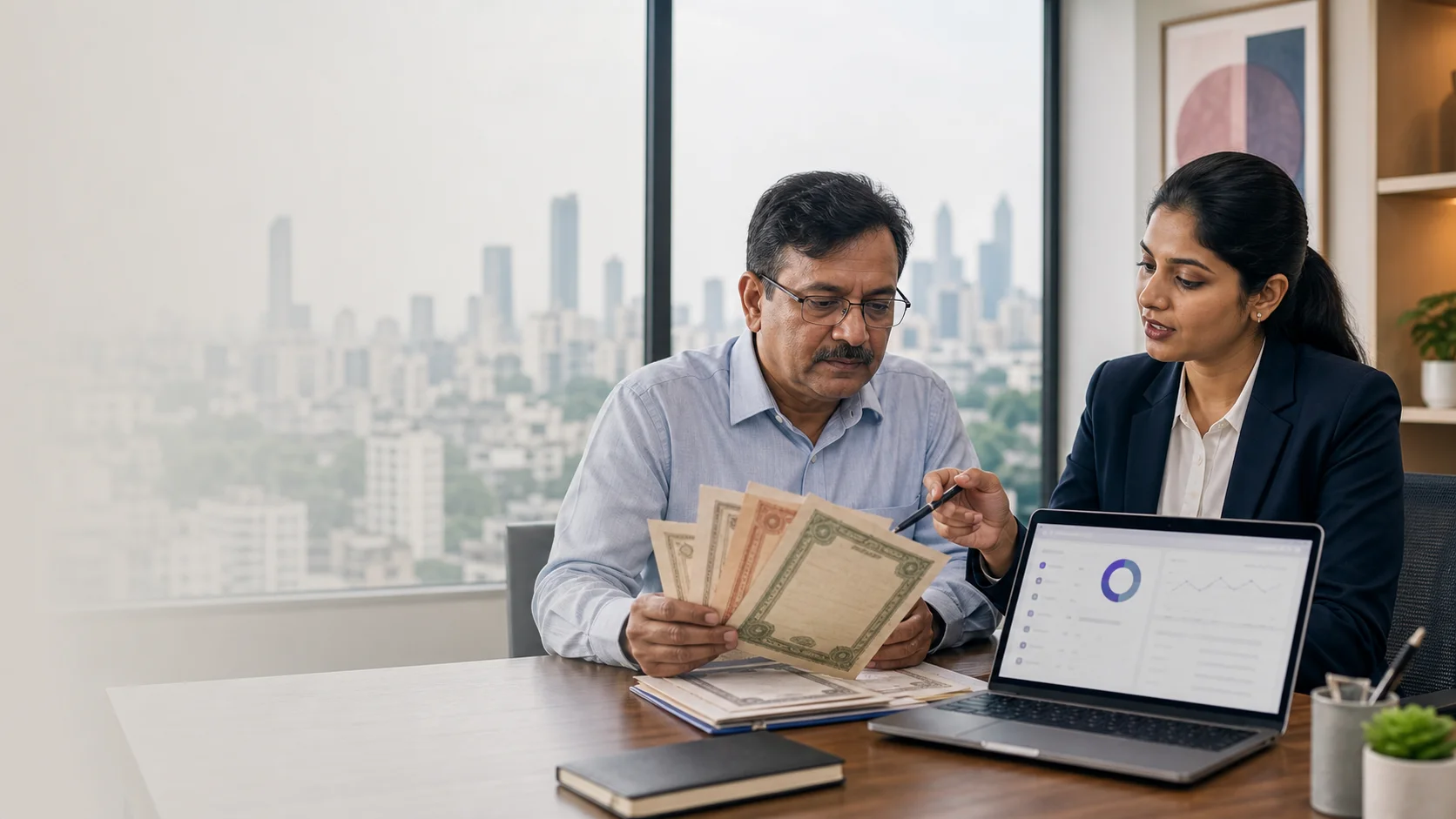
If you are asking what is dematerialization , it is the conversion of eligible paper certificates into electronic securities balances. The dematerialisation of shares replaces physical handling with ownership records maintained through India’s depository system.
Understanding how demat works requires separating the depository, depository participant, broker and issuer’s registrar. A dematerialised account holds securities; a trading account places market orders; and a bank account handles money.
Dematerialisation converts eligible paper evidence into an electronic beneficial-owner balance.
What Is Dematerialisation of Shares?
The dematerialisation of shares is the process of surrendering valid physical certificates so equivalent securities can be credited electronically. CDSL describes dematerialisation as converting physical certificates of shares, debentures or other securities into electronic balances.
The answer to what is dematerialization is not “scanning a certificate.” The paper is verified against issuer records and extinguished after approval. The dematerialization process changes the form of holding, not the investor’s economic ownership.
A dematerialised account is opened with a SEBI-registered depository participant, or DP. NSDL and CDSL are India’s depositories; DPs act as their service interface. This structure explains how demat works without the investor dealing directly with every issuer.
See what markets are pricing in
Live indices, sector moves and market breadth — the backdrop to every story we publish.
How Does the Demat Process Work?
For exchange purchases, the broker executes the order and clearing settlement ultimately credits the investor’s holdings. For a sale, authorised instructions allow securities to be debited for settlement. The dematerialisation of shares is relevant when the starting holding is physical.
In operational terms, how demat works is similar to a record-keeping network. The depository maintains electronic ownership records; the DP handles account instructions; and the registrar and transfer agent, or RTA, maintains the issuer’s security-holder records.
| Participant | Primary role | Investor interaction |
|---|---|---|
| Depository | Electronic ownership infrastructure | Statements and depository services through DP |
| Depository participant | Opens and services account | KYC, requests and instructions |
| Stock broker | Executes exchange orders | Trading account |
| Issuer/RTA | Maintains issuer records | Corporate actions and physical-share verification |
The dematerialization process is only one DP service. The account can also receive market purchases, bonus shares, rights allotments and other eligible credits.
Converting Old Physical Shares: The Dematerialisation Process
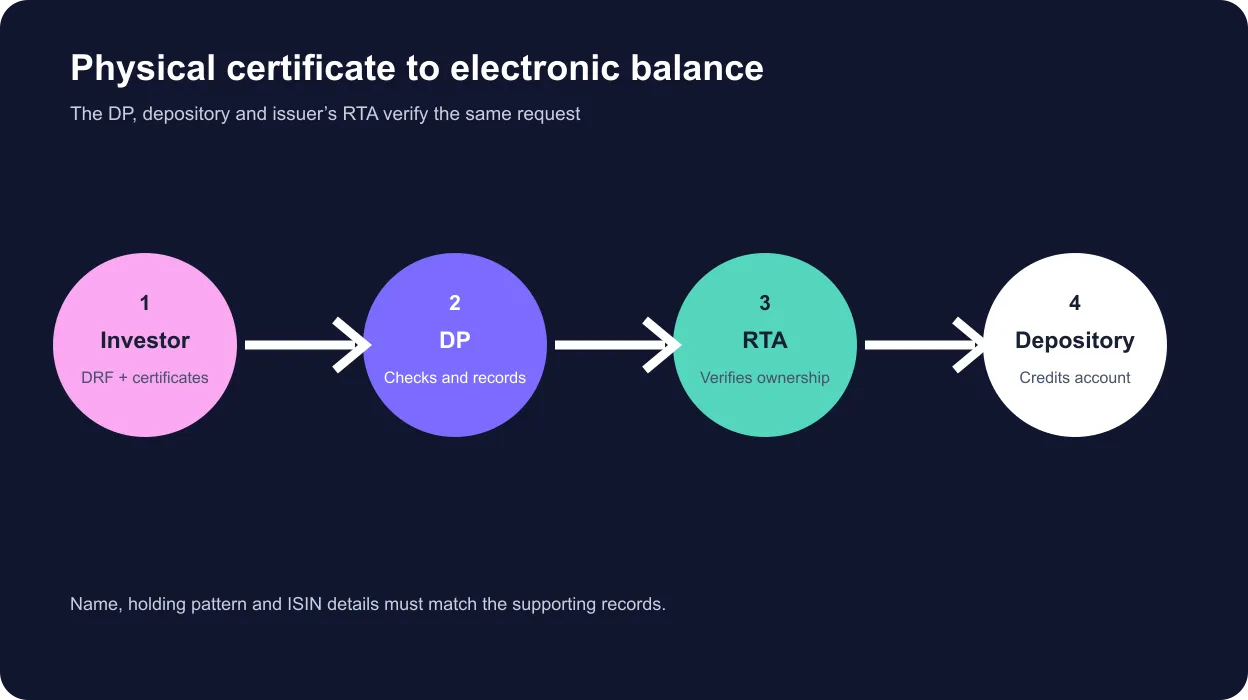
Start the dematerialization process by confirming that the security is eligible and the name and holding pattern on the certificates match the dematerialised account. Complete a separate Dematerialisation Request Form, or DRF, as required for each ISIN and submit it with the certificates to the DP.
The DP checks the request, records it electronically and sends the documents to the issuer’s RTA. The RTA verifies the certificates and ownership records. Once approved, the depository credits the securities. This is how demat works for a standard physical-to-electronic request.
The dematerialisation of shares can be delayed by name mismatches, signature issues, damaged documents, company-name changes or missing succession records. Do not alter certificates casually. Ask the DP or RTA which supporting route applies before beginning the dematerialization process.
Is It Mandatory to Dematerialise Shares in India?
Investors may still hold certain legacy certificates physically, but SEBI clarified that transfers of listed securities in physical form generally cannot be processed from April 1, 2019; shares must first be dematerialised. This rule did not itself prohibit continued physical holding and has distinct treatment for transmission and transposition.
As of August 2026, SEBI’s special window for eligible securities sold or purchased before April 1, 2019 runs from February 5, 2026 to February 4, 2027. Affected investors should check the circular and contact the company or RTA. The dematerialisation of shares under that window requires the specified documentation.
This nuance matters when answering what is dematerialization and whether it is mandatory. The correct dematerialization process depends on whether the case is ordinary demat, transfer, transmission, transposition or a special-window request.
Get research like this in your inbox
The week’s research that mattered, in five minutes. Joined by 2L+ investors.
What Is a Demat Account Used For?
A dematerialised account records eligible shares and other securities electronically. It supports settlement, off-market transfers, pledges, freezes, nominations, corporate-action credits and statements. No minimum balance is required merely to maintain the account, although DP charges may apply.
Knowing how demat works also prevents account confusion. The DP account holds securities; the broker account enables trades. The dematerialisation of shares is not required for securities already issued and credited directly in electronic form.
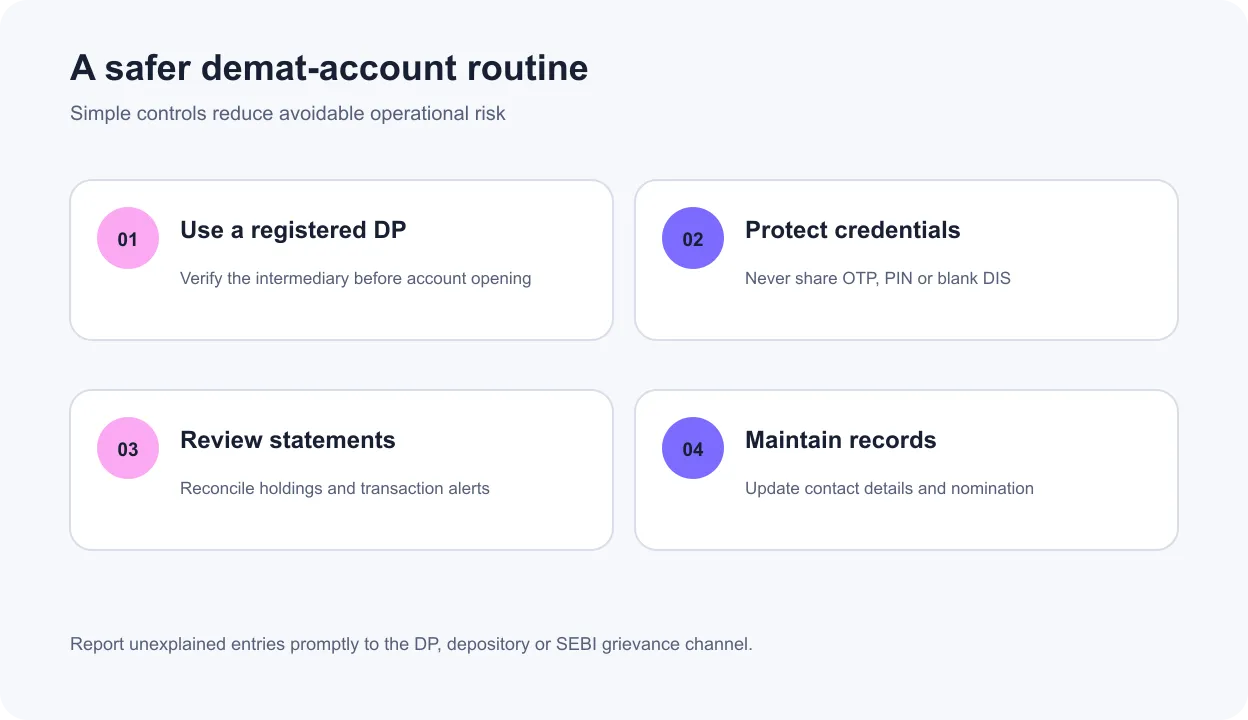
For security, use a registered DP, protect OTPs and PINs, never sign blank delivery instructions, and reconcile statements and alerts. This operational discipline is part of understanding what is dematerialization safely.
Benefits of Holding Shares in Demat Form
The dematerialisation of shares removes risks such as lost certificates, physical deterioration and repeated movement of paper. After the dematerialisation of shares, electronic settlement can be faster and corporate benefits can be credited against recorded holdings.
A dematerialised account also makes portfolio review, pledging and transfer instructions more convenient. Still, demat does not remove market risk, fraud attempts or the need to monitor entries. Understanding how demat works includes checking every unexpected debit or credit promptly.
For legacy holdings, completing the dematerialization process can make future transfer and portfolio administration easier. The benefit comes from verified electronic records, not from any change in the underlying share’s value.
Conclusion
The simplest answer to what is dematerialization is conversion from eligible paper certificates to electronic balances. The dematerialisation of shares links the investor, DP, depository and RTA through a verification process.
Open the dematerialised account with a registered DP, match records carefully and follow the correct dematerialization process for the specific case. For old untransferred certificates, review the current SEBI special-window rules rather than relying on generic instructions.
Is your portfolio built for what’s coming?
Get a free AI-powered review of your holdings — risk, overlap and quality in minutes.
FAQ
What is dematerialisation of shares?
It is the conversion of eligible physical share certificates into electronic balances held through a depository participant in a demat account.
How does demat work?
A depository records securities electronically, while a registered depository participant services the investor account. Trades and approved transfers debit or credit the relevant holdings.
What is the dematerialisation process for old physical shares?
Open a matching demat account, submit a Dematerialisation Request Form and eligible certificates to the DP, and allow the DP, depository and issuer’s RTA to verify and credit the holdings.
Is it mandatory to dematerialise shares in India?
Physical holdings are not automatically invalid, but transfers of listed securities in physical form have generally not been processed since April 1, 2019. Demat is required before such shares can be transferred, subject to applicable exceptions and special windows.
What is a dematerialised account used for?
It electronically holds eligible securities and supports settlement, transfers, pledges, corporate-action credits, nominations and consolidated statements. A trading account is separate and is used to place buy and sell orders.