
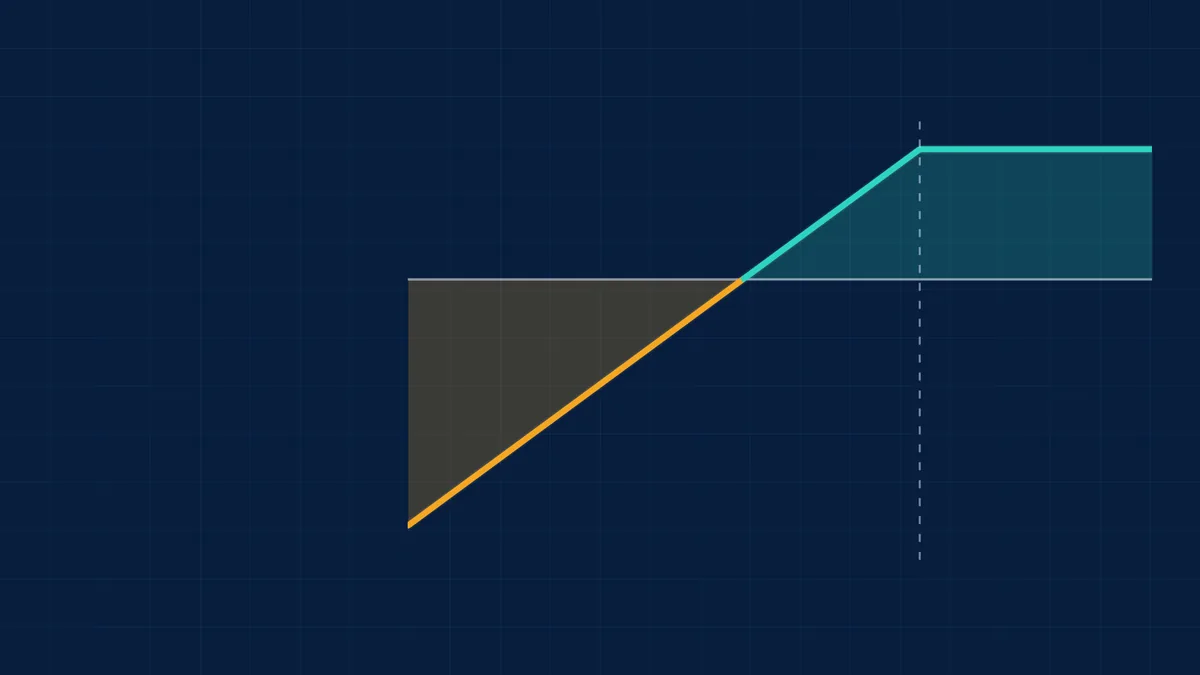
A covered call is an options strategy in which an investor who owns shares sells a call option on them. The premium received adds income and gives a small cushion against falls, but the shares may be called away if price rises above the strike, which caps the upside.
How it is built
- Own the underlying shares (or a lot of futures-eligible stock).
- Sell an out-of-the-money call against them, usually a month or less to expiry.
- The premium received is kept whatever happens.
See what markets are pricing in
Live indices, sector moves and market breadth — the backdrop to every story we publish.
A worked example
An investor owns a stock at Rs 100 and sells a call with a strike of 105 for Rs 2 per share.
| Item | Calculation | Result |
|---|---|---|
| Maximum profit | (105 - 100) + 2 | Rs 7 per share, at or above 105 |
| Breakeven | 100 - 2 | Rs 98 |
| Return if price falls to 95 | (95 - 100) + 2 | -Rs 3 per share |
| Return if price rises to 112 | (105 - 100) + 2 (capped) | Rs 7 per share, not Rs 14 |
Get research like this in your inbox
The week’s research that mattered, in five minutes. Joined by 2L+ investors.
When traders use it
- To earn income on shares the holder does not expect to rise sharply in the short term.
- As a mild hedge in a sideways market. Systematic versions are tested in research, such as selling calls on a basket of stocks; results depend on the stocks, strikes and costs.
Risks and costs
- The upside above the strike is given up. If the stock jumps, the holder misses the gain.
- The downside is only cushioned by the premium. A large fall still causes a large loss on the shares.
- Dividends and taxes can affect the result, and in India, stock options are physically settled, so assignment matters at expiry.
Risk note. Strategies that sell options can lose far more than the premium received, and margin requirements apply. SEBI studies have found that roughly nine in ten individual traders in equity derivatives lost money, mostly after costs. See risk management in options trading and transaction costs. Prices below are per unit of the underlying, so multiply by the lot size for rupee amounts. Examples use illustrative Nifty prices and ignore brokerage, taxes and margin.
Related: protective put and collar. See the full options strategies guide.
Is your portfolio built for what’s coming?
Get a free AI-powered review of your holdings — risk, overlap and quality in minutes.
Frequently Asked Questions
What is a covered call?
Selling a call option against shares you already own, to earn the premium while capping the upside.
What is the maximum profit on a covered call?
The strike minus the purchase price plus the premium received.
What is the breakeven of a covered call?
The purchase price minus the premium received.
When does a covered call lose?
When the stock falls by more than the premium received. The premium only cushions small falls.
This article is for education only and is not investment advice. Indicator readings describe past price behaviour and do not predict future returns.