

Getting high returns sounds appealing, but discussing profits without discussing the risk involved is pointless. In general, high gains come with a considerable risk. A high-risk investment has either a high percentage likelihood of financial loss or underperformance or a comparatively high chance of a catastrophic failure. They are only appropriate for experienced investors who understand the dangers and are willing to lose the entire investment. In this essay, we will go over what High Risk, High Return investing is all about. We will also discuss how to construct high-risk, high-return portfolios and the considerations to consider when investing in them.
Understanding High-Risk, High-Return Investing
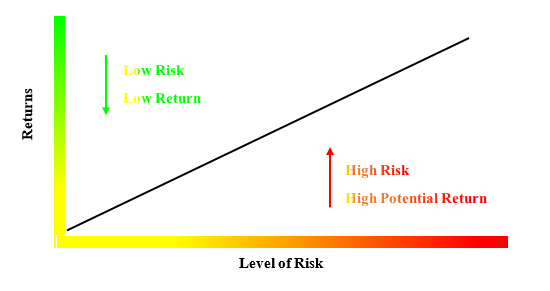
The risk-reward trade-off is vital to high-risk, high-return investing. It means a direct relationship exists between the level of risk an investor is willing to take and the potential reward. High-return investments have a higher risk of loss. On the other hand, they have a higher chance of profit. As a result, they are uncertain. These investments are frequently more volatile, which means that their prices can move dramatically in a short period. This volatility can result in both significant gains and large losses. To better comprehend this concept, consider the characteristics of high-risk/ high-return investments.
- They target a high rate of return.
- There is a greater likelihood of loss
- They are more volatile than lower risk equivalents. They are often dependent on market confidence. In periods of economic uncertainty, they tend to fluctuate even more.
See what markets are pricing in
Live indices, sector moves and market breadth — the backdrop to every story we publish.
How to Build High-Risk, High-Return Alpha Portfolio
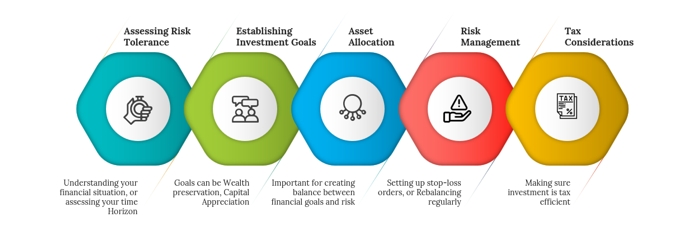
1. Assessing Your Risk Tolerance
Assessing your risk tolerance in high-risk,
high-return investing is a crucial first step in determining whether this
investment strategy is suitable for you and how to approach it.
2. Establishing Clear Investment Goals
To ensure that one is capable of handling
these risky portfolios, one must identify their investment goals. They can
include capital growth, income production, and asset preservation. Defining an
objective is critical since it will aid in the selection of appropriate
techniques. Capital appreciation is an aggressive growth strategy that is
typically used in high-risk, high-return portfolios.
3. Asset Allocation Strategies
Asset allocation entails splitting your
investment portfolio among several asset classes based on your financial
objectives, risk tolerance, and time horizon. A higher allocation to equities
(stocks) in a high-risk, high-return alpha portfolio may offer the potential
for higher returns but come with more volatility. Consider allocating a smaller
share to fixed-income assets such as bonds or cash, which typically have lower
risk and higher returns than stocks.
4. Selecting High-Risk Investment Portfolios
Determine asset groups or specific
investments with high returns track record. You can also invest in
Small-cap stocks which are the shares of smaller companies
with substantial growth potential but are more volatile. Another way
is to invest in developing economies with the potential for significant
growth but also increased political and economic dangers. Consider assets such
as venture capital, cryptocurrencies, or high-risk/high-reward enterprises.
5. Research and Due Diligence
Perform extensive study on each investing
possibility. This covers financial statement analysis and performance measures.
Analysing the competitive landscape and the company's place within it.
Evaluating the track record and expertise of the management team. Keep up to
current on market news and economic issues that may have an impact on your
assets.
6. Risk Management Strategies
To protect your portfolio from substantial
losses, use risk management approaches such as: Stop-Loss Orders: To limit
potential losses, set specified price levels at which you will sell an
investment. Diversification means spreading your investments across multiple
assets to lower the risk of a single failure. Hedging: Use derivatives or
options to offset future portfolio losses.
7. Monitoring and Review
Monitor your investments on a regular basis
and evaluate their performance in relation to your goals. Prepare to make
changes to your portfolio as market conditions or your risk tolerance change.
To preserve your preferred asset allocation, consider rebalancing your
portfolio on a regular basis.
8. Tax Considerations
Every investment has costs. Taxes can sting the most out of all the expenses and take the biggest bite out of your returns. Different investment types generate varying tax consequences, so make sure your investments are tax-efficient, especially in tax-advantaged accounts like IRAs
Read this article to know - Top Performing High Risk Stocks to Invest in 2024
What are high risk investments?
High-risk investments are financial assets that have a greater potential for significant returns but also come with a higher probability of loss. High risk is an outstanding feature of speculative investments, where the potential for significant returns is accompanied by a higher likelihood of loss. These investments typically include assets such as high-yield bonds, start-up ventures, certain stocks, and cryptocurrencies, where market volatility and uncertainty are prevalent.
High risk is an outstanding feature that high risk investors seek and want substantial capital appreciation. They are willing to accept the possibility of substantial losses in pursuit of these gains. These investments require careful analysis, a thorough understanding of the market, and a strong risk tolerance.
The high rewards appeal of High risk is an outstanding feature. For example, investing in a start-up company can yield exponential returns if the company becomes successful. However, the flip side is the possibility of losing the entire investment if the venture fails. Similarly, high-yield bonds offer higher interest rates compared to investment-grade bonds but carry a greater risk of default. Due to the uncertain nature of these investments, investors often employ various risk management strategies, such as diversification, hedging, and setting stop-loss orders, to mitigate potential losses. High-risk investments are generally suited for investors with a long-term perspective and the financial stability to withstand short-term volatility.
While the promise of substantial gains can be enticing, the inherent instability requires investors to have a robust risk tolerance and a comprehensive understanding of the market dynamics. Effective risk management strategies and a well-defined investment horizon are crucial when engaging in high-risk investments, as they help mitigate potential losses while aiming for attractive returns.
Get research like this in your inbox
The week’s research that mattered, in five minutes. Joined by 2L+ investors.
Types of High-Risk Portfolios
High-risk portfolios are investment portfolios with a higher
level of risk than more conservative or balanced portfolios. The following
discusses many forms of high-risk portfolios.
1. Aggressive
growth portfolio
This style of investing portfolio focusses
on high-growth stocks. These are often found in emerging industries or
companies with significant future growth potential. These stocks are generally
more volatile and tend to experience frequent price swings.
2. Small-Cap Portfolio
Small-cap stocks represent companies with
smaller market capitalizations. They often have greater growth potential but
are also riskier because they may lack the resources and stability of larger
companies.
3. Sector
Specific Portfolio
Investors may choose to concentrate their
assets on recognised volatile sectors. In the Indian context, the IT business
is recognised to be highly volatile because technology is a constantly evolving
field with ever-increasing developments, resulting in organisations seeing
rapid growth from outside clientele. Pharmaceutical and healthcare are two more
sectors that have recently become more unpredictable. It has been volatile
since covid-19 due to international rivalry for vaccination and regulatory
changes.
4. Commodity or Natural Resource Portfolio
Commodity investing, such as gold, oil, or
agricultural items, can be risky owing to price volatility and reliance on
factors such as supply and demand, geopolitical events, and weather conditions.
5. Options and Derivatives Portfolio
Options and futures contracts are highly
leveraged derivative transactions that can result in large gains or losses.
They are often employed for hedging or speculative purposes by skilled
investors.
6. Cryptocurrency Portfolio
Bitcoin and Ethereum are well-known for
their high price volatility. While they have the potential for large gains,
they also have a high danger of large losses.
Why
Choose Wright Research Alpha prime Portfolio?
Moreover, it has live returns performance of about ~36% in 4 months period, whereas the benchmark Small cap index has delivered a performance of ~22% during that period.
Following are the key highlights of this portfolio
- Its Selected stocks demonstrate impressive
momentum and potential for higher returns.
- It has potential for significant gains in bullish markets and resilience
during high-risk scenarios.
- It has weekly portfolio rebalancing & high portfolio churn to seize fresh trending & emerging opportunities.
To know more about investing
in this, Explore the Wright
Alpha Prime Portfolio and Wright Alpha Prime Smallcase
Conclusion
In this article, we've dived into the intriguing world of
high-risk, high-return investing, looking at the methods and considerations
that can help you develop a successful alpha portfolio. Whether you're an
experienced investor trying to diversify your assets or a beginner willing to
take on more risk for the possibility of bigger profits, understanding the
procedures involved is critical.
Remember that while high-risk, high-return investment can be
beneficial, it is not without risk. It is critical to approach it with cautious
planning, ongoing learning, and a readiness to adapt to changing market
conditions. By following the stages and ideas provided in this guide, you may
embark on your high-risk investing journey with confidence and a better chance
of meeting your financial objectives.
Is your portfolio built for what’s coming?
Get a free AI-powered review of your holdings — risk, overlap and quality in minutes.
FAQ
1. What exactly is a high-risk, high-return portfolio?
A portfolio emphasizing riskier assets to seek
potential high gains but with higher potential for significant losses.
2. Why Seek High-Risk, High-Return Portfolio?
For rapid wealth growth or specific financial
goals requiring aggressive growth.
3. What is the typical return range for a high-risk,
high-return portfolio?
Can vary widely but often exceeds market
averages, ranging from -50% to +100% or more.
4. Is a high-risk, high-return portfolio suitable for all
investors?
Not suitable for all investors; best for those
with high risk tolerance and a long-term horizon.
5. What are some common mistakes to avoid when building a
high-risk portfolio?
Overconcentration, lack of diversification, poor
risk management, and misalignment with goals and risk tolerance.
6. What should I do if my high-risk investments
underperform?
Reevaluate strategy, consider risk management,
and adjust or exit investments as needed.