


A bond vs debenture comparison begins with a shared fact: both can represent money lent to an issuer. The debenture meaning is often used loosely, so the issue document matters more than a simplistic rule that one is always secured and the other unsecured.
The debenture meaning in India depends on legal form and contractual terms. The difference between bond and debenture requires checking the contractual terms.
Fixed-income labels are only the start of due diligence.
What Is a Debenture?
The debenture meaning is a debt instrument acknowledging an issuer’s borrowing obligation. The difference between bond and debenture cannot be determined from the word alone because debentures may be secured, unsecured, convertible or non-convertible.
For a listed non-convertible debenture, investors should read the offer document, trust-deed disclosures and rating rationale. The debenture meaning includes the creditor’s rank and enforcement rights. In a bond vs debenture review, these details shape recovery prospects.
See what markets are pricing in
Live indices, sector moves and market breadth — the backdrop to every story we publish.
What Is a Bond?
A bond is a debt instrument issued by a government, company or other entity for a defined period, generally with stated interest and repayment terms.
The difference between bond and debenture is therefore not simply “safe versus risky.” The debenture meaning likewise describes borrowing, not guaranteed repayment.
Bond vs Debenture: Core Differences
But the bond vs debenture distinction varies across markets. The difference between bond and debenture must be established from the instrument’s actual conditions.
| Feature | What to verify | Why it matters |
|---|---|---|
| Issuer | Government, company or institution | Primary source of repayment |
| Security | Charged assets and seniority | Potential recovery in default |
| Cash flow | Coupon, yield and maturity | Return and reinvestment risk |
| Optionality | Call, put or conversion terms | Can alter timing or ownership |
| Liquidity | Listing, volume and spread | Cost of exiting early |
This practical debenture meaning avoids false certainty. In any bond vs debenture decision, higher yield usually signals compensation for some combination of credit, duration, subordination, liquidity or structural risk.
Corporate Bonds vs Debentures
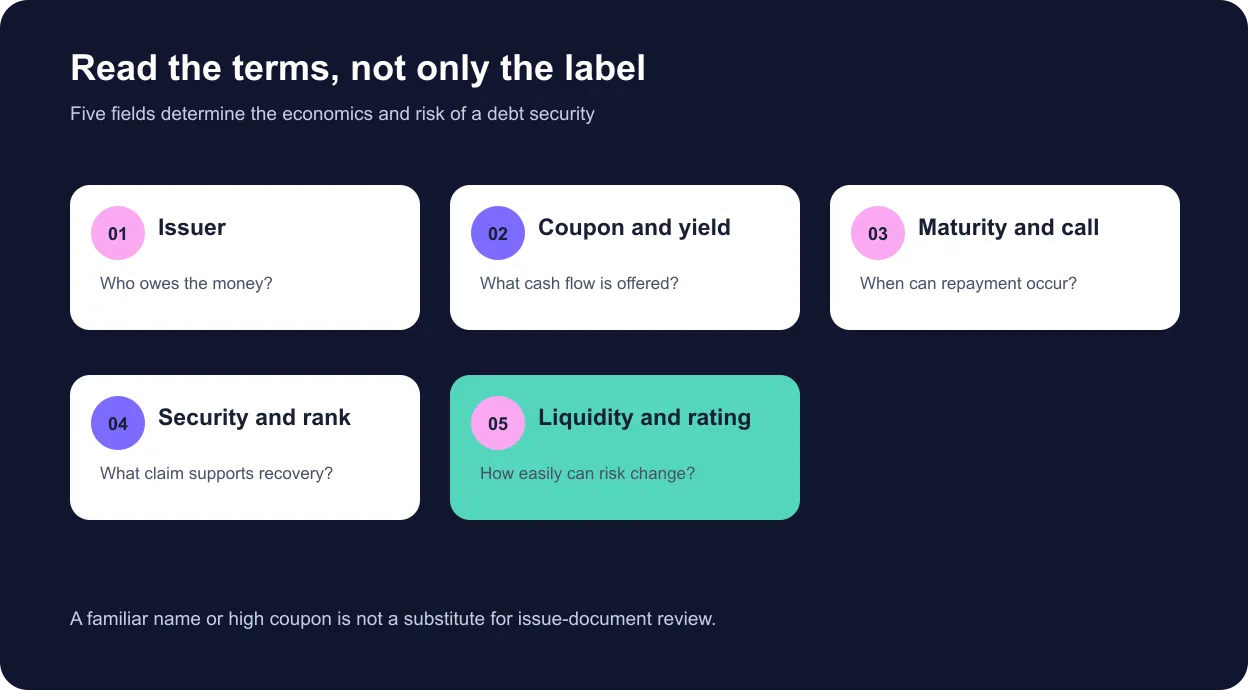
A corporate bond vs debenture comparison often concerns two corporate debt labels with overlapping features. The debenture meaning may be more specific in company documentation, but the difference between bond and debenture still depends on security, ranking, covenants and redemption terms.
When evaluating corporate bond vs debenture choices, compare yield to maturity rather than coupon alone. A bond vs debenture label does not substitute for issuer analysis.
Is a Debenture Safer Than a Bond?
No. The debenture meaning does not promise safety. A secured instrument has identified collateral, but recovery depends on asset value, legal priority and enforcement.
The difference between bond and debenture is less useful than comparing default, interest-rate, liquidity and call risk. In a bond vs debenture assessment, government credit may differ from corporate credit, while long maturities can still create large price swings.
Get research like this in your inbox
The week’s research that mattered, in five minutes. Joined by 2L+ investors.
Bond vs Share vs Debenture
A bond vs share vs debenture comparison separates creditors from owners. Bondholders and debenture holders generally have contractual claims; shareholders own equity, may vote and receive residual value after creditors.
The debenture meaning remains debt unless conversion terms change that status. The difference between bond and debenture is narrower than the difference between debt and shares. In bond vs share vs debenture analysis, equity offers upside participation but usually absorbs losses before debt.
Tax, cash-flow priority and volatility also differ. A second debenture meaning and bond vs share vs debenture check should focus on the investor’s goal rather than the highest advertised return.
Can Retail Investors in India Buy Debentures?
Yes. Investors can participate in eligible public issues or buy listed non-convertible securities through permitted exchange and intermediary routes. SEBI publishes lists of online bond platform providers registered with NSE and BSE. The debenture meaning should still be verified in the offer document.
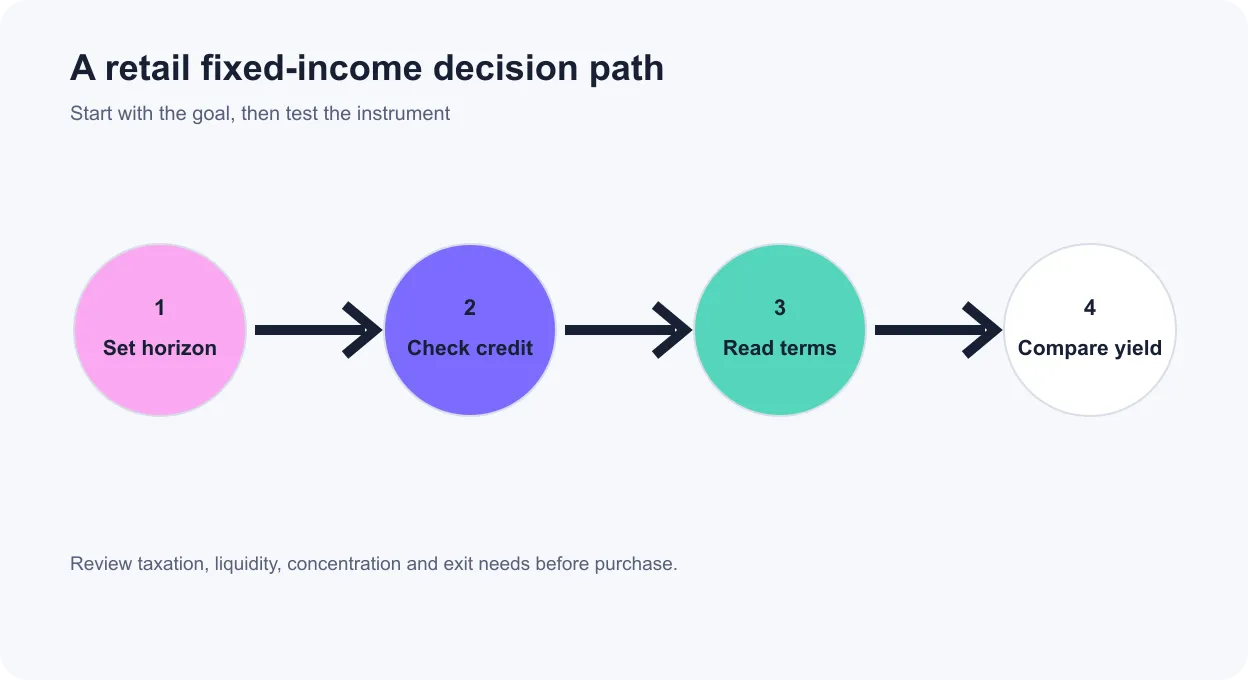
The difference between bond and debenture does not change basic due diligence: complete KYC, check lot size, rating, security, liquidity and settlement.
Which Should You Choose: Bond or Debenture?
The debenture meaning on a product page is not enough.
The difference between bond and debenture should be documented, not assumed. In a corporate bond vs debenture shortlist, prefer transparent terms and adequate liquidity. A bond vs debenture decision should also compare a government-security alternative where capital preservation is central.
Conclusion
The debenture meaning and the difference between bond and debenture are rooted in the contract. Neither label alone establishes collateral, safety or return. A disciplined bond vs debenture comparison reads the offer document and tests repayment capacity.
For investors, the useful question is not which word sounds safer. It is which claim and maturity fit the portfolio.
Is your portfolio built for what’s coming?
Get a free AI-powered review of your holdings — risk, overlap and quality in minutes.
FAQ
What is the meaning of debenture?
A debenture is a debt security through which an issuer borrows from investors under stated terms. In India, the issue document determines whether it is secured or unsecured, convertible or non-convertible, listed or unlisted.
What is the difference between bond and debenture?
Both can represent debt. Bond is a broad market term, while debenture is often a legal or issuance label. Investors should compare issuer, security, seniority, coupon, maturity, covenants, rating and liquidity instead of relying on the name.
Is a debenture safer than a bond?
Not automatically. Safety depends on the issuer’s repayment capacity, collateral and its enforceability, seniority, covenants, maturity and liquidity. A secured debenture can still lose money, and a government bond can carry interest-rate risk.
What is a corporate bond vs debenture?
Both commonly describe corporate borrowing instruments. The decisive details are in the offer document: security, conversion rights, ranking, coupon, redemption and default provisions. The debenture meaning alone does not establish risk.
Can retail investors buy debentures in India?
Yes. Retail investors can access eligible public issues and exchange-listed non-convertible securities through permitted channels, including registered intermediaries and SEBI-registered online bond platform providers. Eligibility and lot size vary by issue.