
India's FMCG sector has been one of the steadiest wealth creators in Indian markets. Companies like HUL, Nestle India, Britannia and ITC compounded through recessions, demonetisation and a pandemic, while the market rewarded them with valuations well above the broader index. That premium rested on a simple formula: control the shelf and control the mind. This piece looks at why, and what it means for the companies and investors who depend on it.
What made Indian FMCG companies so hard to beat?
For decades, two advantages protected large FMCG companies from competition. The first was distribution. A network of kirana stores, built over years and backed by a layer of distributors, gave incumbents access to almost every neighbourhood in the country. Kirana stores paid in cash, which gave companies negative working capital, and this access created a real barrier for any new entrant trying to build a rival network from scratch.
The second advantage was recall. Decades of mass advertising built brand names that consumers reached for out of habit. Clinic Plus, Colgate, Parle, and Maggi became the default answer to a category need. Distribution put products in front of the shopper. Advertising kept those products in the shopper's mind. Together, these two advantages let large companies dominate categories with limited pressure to innovate quickly, because the consumer bought what was available and what was familiar. That combination is now under pressure from a consumer who behaves differently and channels that no longer sit fully in the incumbent's control.
See what markets are pricing in
Live indices, sector moves and market breadth — the backdrop to every story we publish.
Why is a new consumer breaking the old playbook?
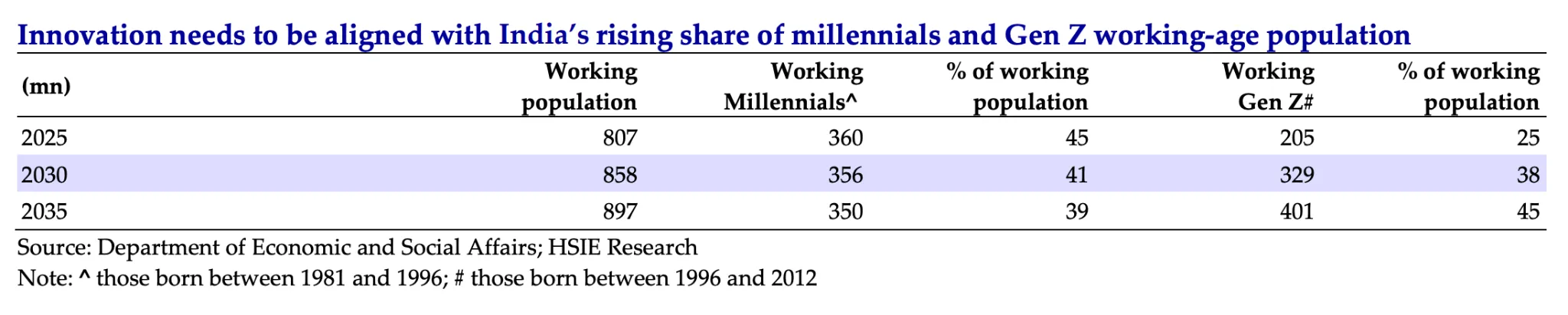
Millennials and Gen Z are becoming India's dominant working population. Gen Z made up about 25% of India's working-age population in 2025. That share is projected to rise to 38% by 2030 and 45% by 2035, even as the millennial share gradually declines.
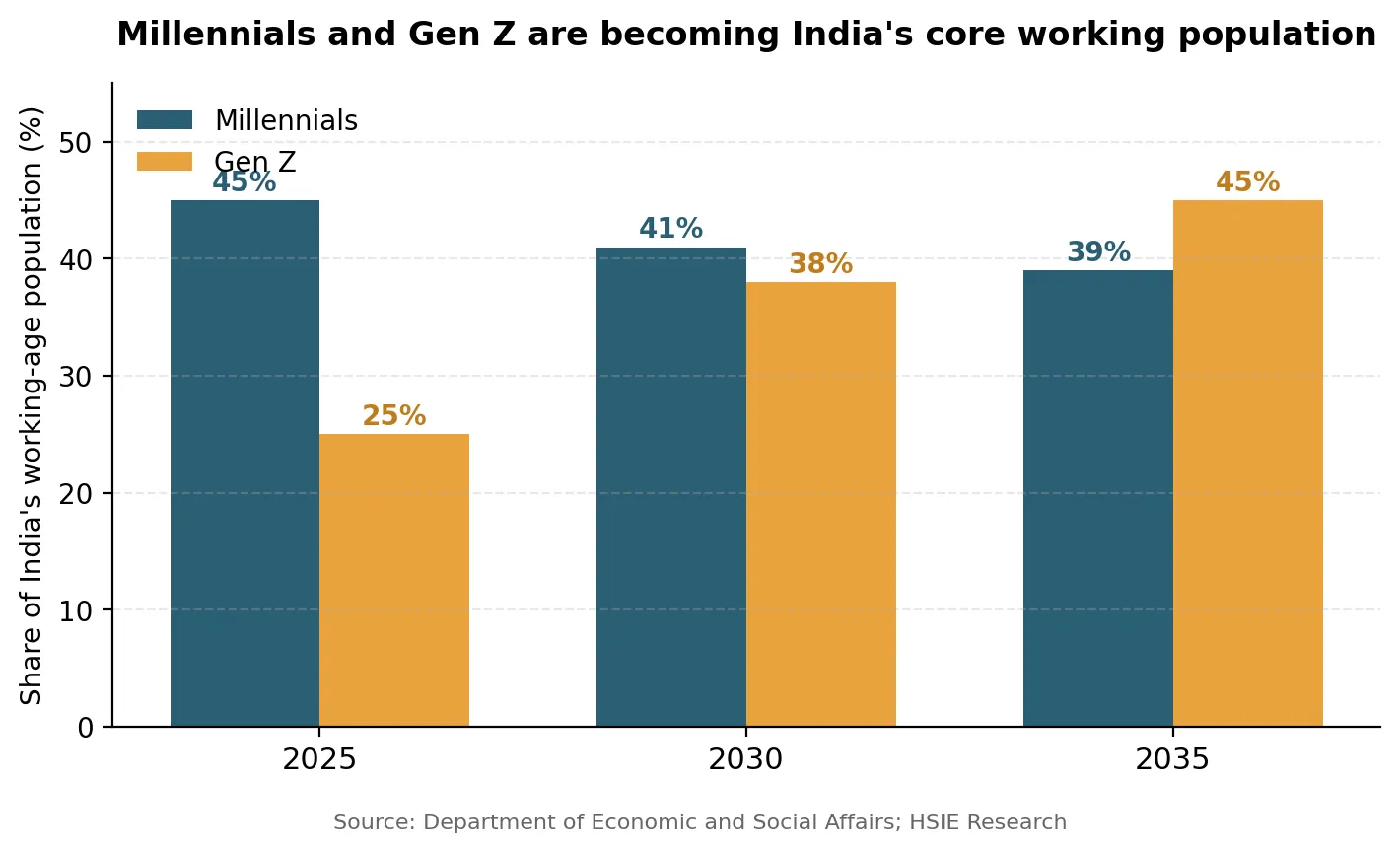
Chart 1: Gen Z's share of India's working-age population, 2025-2035
This consumer researches a purchase before making it and compares products actively rather than defaulting to a familiar name. Products are increasingly built for a specific need rather than an entire category. A shampoo, for instance, gets positioned as sulphate-free for coloured hair, or as a scalp serum aimed specifically at hair fall. Categories that once served everyone are splitting into narrow, well-defined needs, each served by its own product.
Category data already reflects this shift. Traditional segments such as functional nutrition drinks and Chyawanprash are seeing volume declines, as consumers move toward alternatives such as vitamin and mineral supplements. Brands built around a single, sharply defined need are capturing a growing share of new, incremental spending, even in categories where large incumbents still hold most of the existing market.
Why are legacy companies buying brands instead of building them?
Building a niche brand from the ground up takes years, and it runs against the instincts of a company built for scale. Buying an existing one is faster. Marico has spent the past few years acquiring and backing digital-first brands such as Beardo, Just Herbs, Plix and Cosmix, each addressing a narrower need than its traditional hair oil and edible oil portfolio. HUL acquired Minimalist in 2025, a brand built around ingredient-led skincare, a sharp departure from mass-market names such as Pond's.
Playing this game requires a strong balance sheet. ITC holds net cash equal to about 8% of its market capitalisation, and Dabur holds about 11%, giving both firepower for acquisitions. Godrej Consumer Products and Gopal Snacks carry net debt instead, so a large deal for either would likely require fresh borrowing.
Cash on the balance sheet is only half the story
A strong balance sheet does not always translate into a deal. Britannia has returned close to 80% of profits to shareholders as dividends over the past five years, well above the sector average, favouring payouts over acquisitions. Acquisitions carry their own risk too. HUL's roughly ₹3,000 crore purchase of Horlicks and Boost was meant to build scale in health food drinks, but the category was already slowing, and both brands later faced scrutiny over their health claims, pushing HUL to reclassify them as nutritional drinks. A deal can close a strategy gap, or it can lock a company deeper into a category that was already losing relevance.
How has quick commerce changed who controls distribution?
FMCG built its economics around fragmented distribution and consolidated brands. That pattern is inverting. Brands are splitting into a long tail of niche names, while distribution is consolidating into a handful of quick commerce platforms.
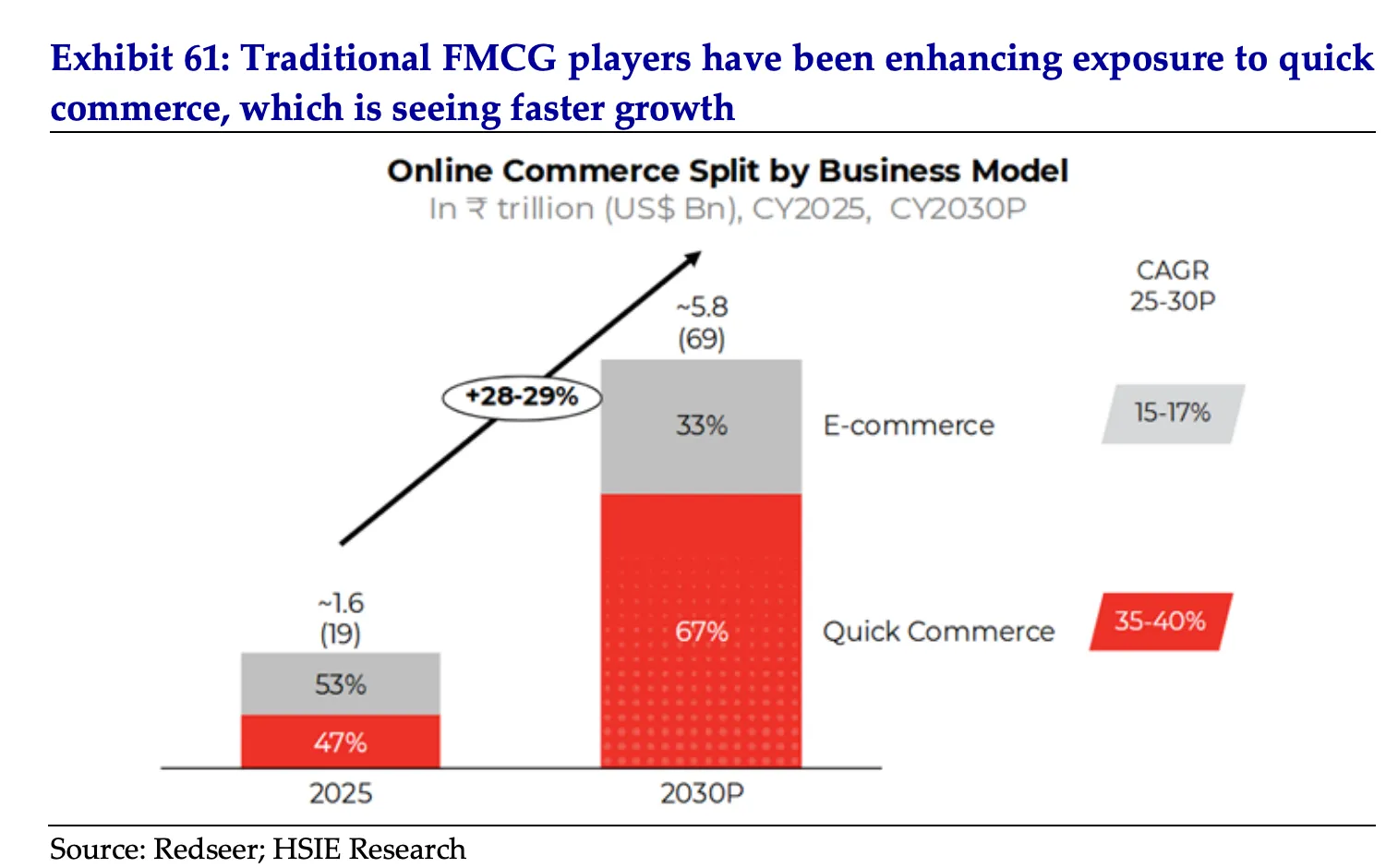
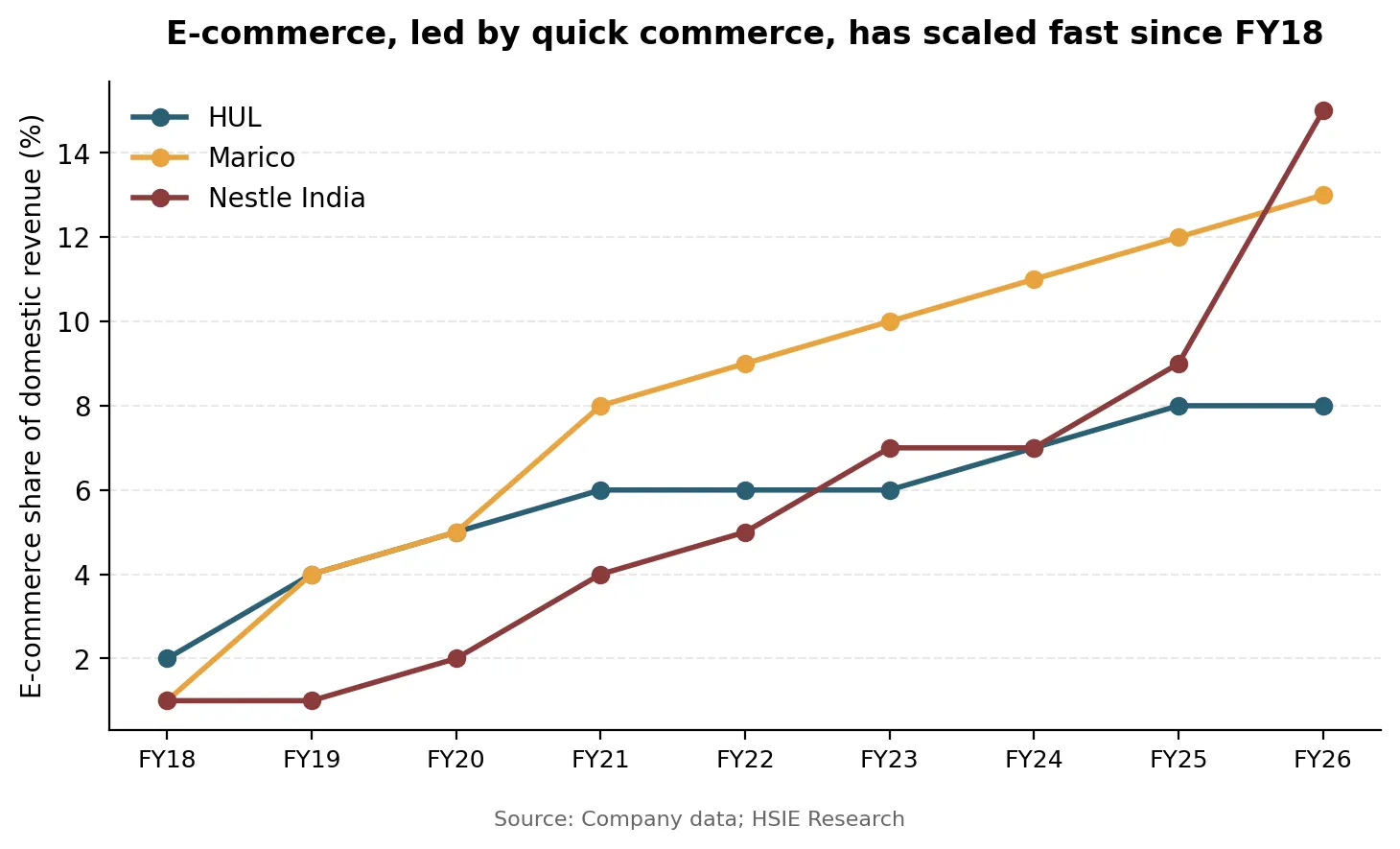
For several large FMCG companies, quick commerce already accounts for 50-70% of total e-commerce revenue, and e-commerce overall contributes an estimated 8-15% of domestic sales.
Why does the format pull so much volume?
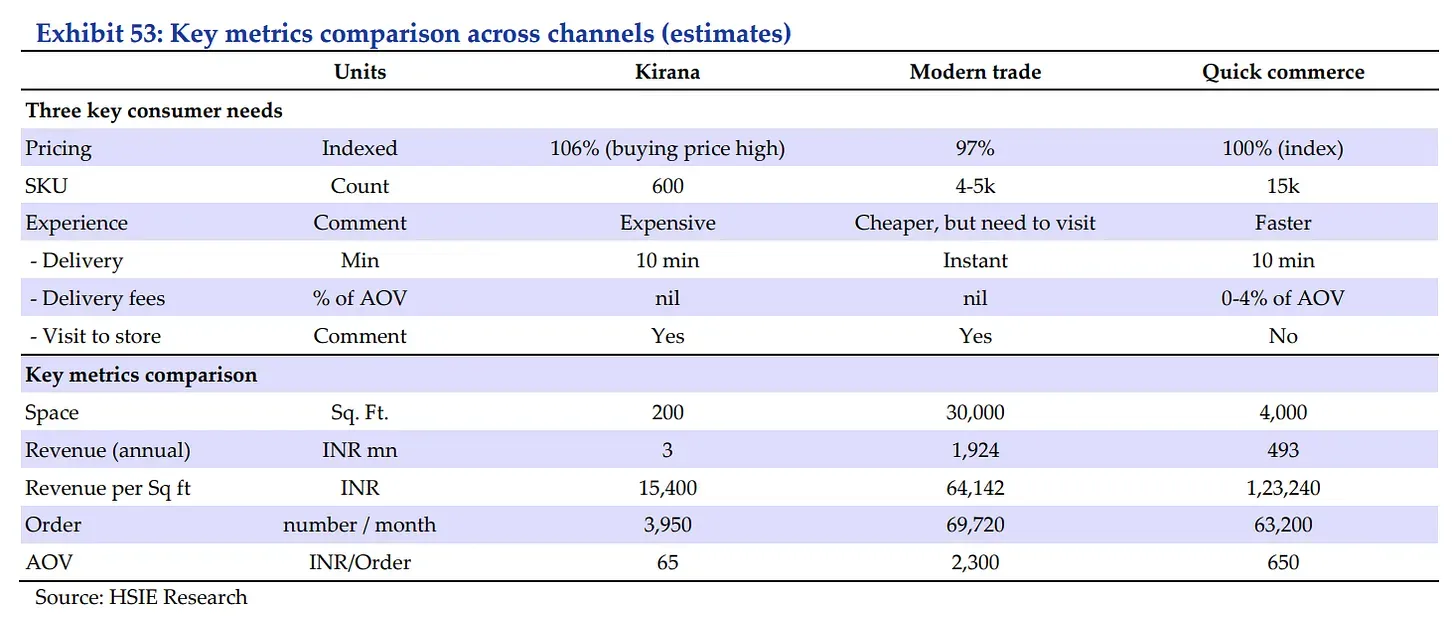
The pull comes from the underlying economics of the format. A kirana store runs out of roughly 200 square feet, stocks about 600 stock-keeping units, and generates estimated annual revenue of about ₹15,400 per square foot. A quick commerce dark store runs out of about 4,000 square feet, stocks around 15,000 items, and generates close to ₹1.23 lakh per square foot.
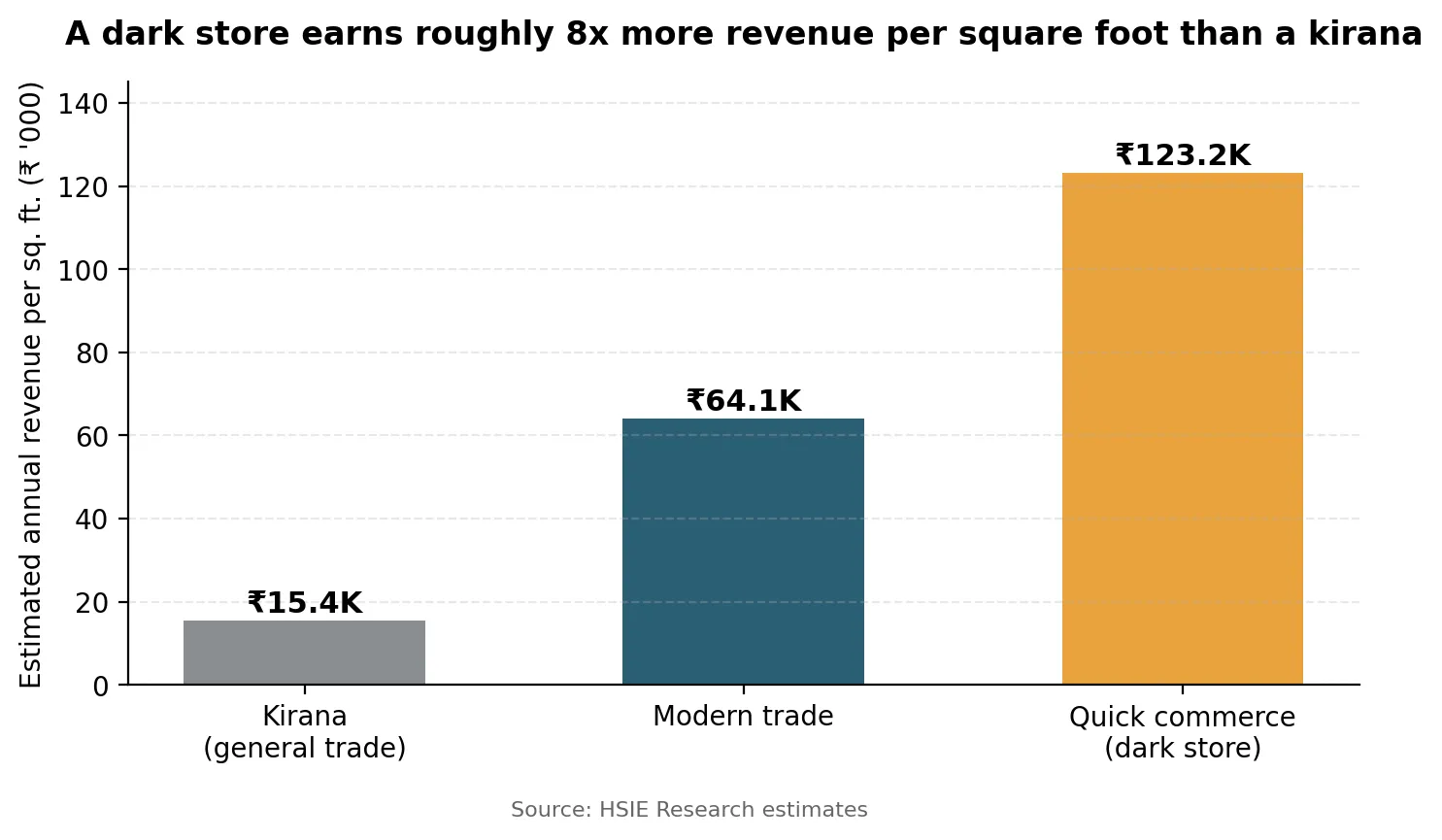
Chart 3: Estimated annual revenue per square foot by retail format
This scale has shifted negotiating power toward the platforms. A single kirana owner carries little leverage with a large distributor. A quick commerce platform, once it reaches scale, can set terms the way only the largest modern retail chains once could, pushing brands for higher margins and larger marketing budgets to stay listed. FMCG companies are responding by cutting reliance on wholesalers, strengthening direct outlet reach in markets less touched by quick commerce, and building dedicated teams to manage the channel.
Get research like this in your inbox
The week’s research that mattered, in five minutes. Joined by 2L+ investors.
Is data really becoming FMCG's new moat?
Every purchase made through an app leaves a trail: what a consumer searched for, what she clicked on, what she abandoned, and what she finally bought. Large incumbents are investing heavily to capture and use this trail. HUL runs an AI platform called Sangam for media spend optimisation and a supply chain system called Samarth built on more than 90 terabytes of data. ITC runs a programme called Mission DigiArc. Tata Consumer and Nestle India report similar internal build-outs of their own.
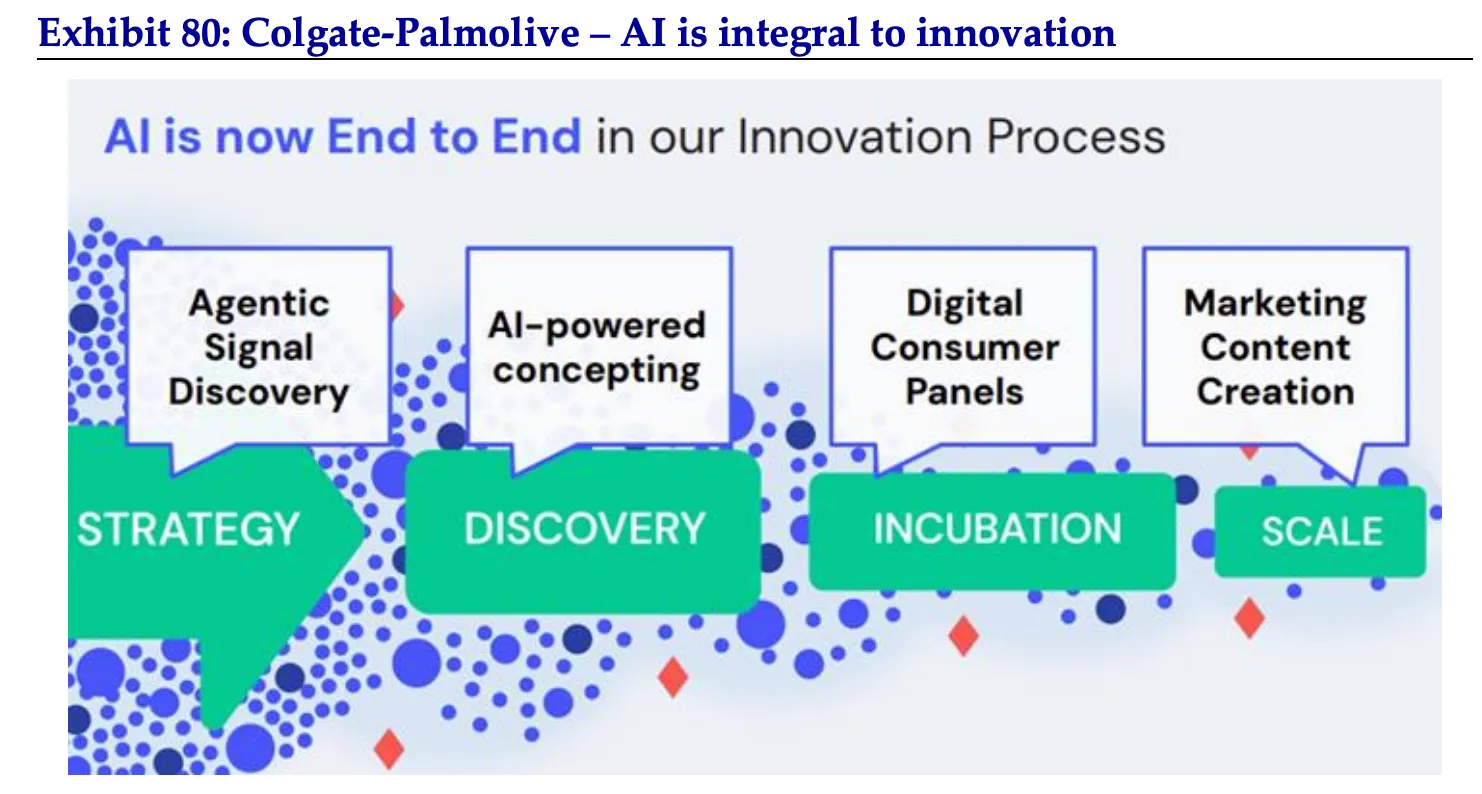
Newer entrants argue they can move faster with far less scale. Honasa Consumer has built a system called ResearchOS, which the company says cuts product development time from 12-15 months down to 4-5 months, using tools that detect early trend signals, flag gaps in existing products, and test concepts with consumers before any money is spent on marketing.
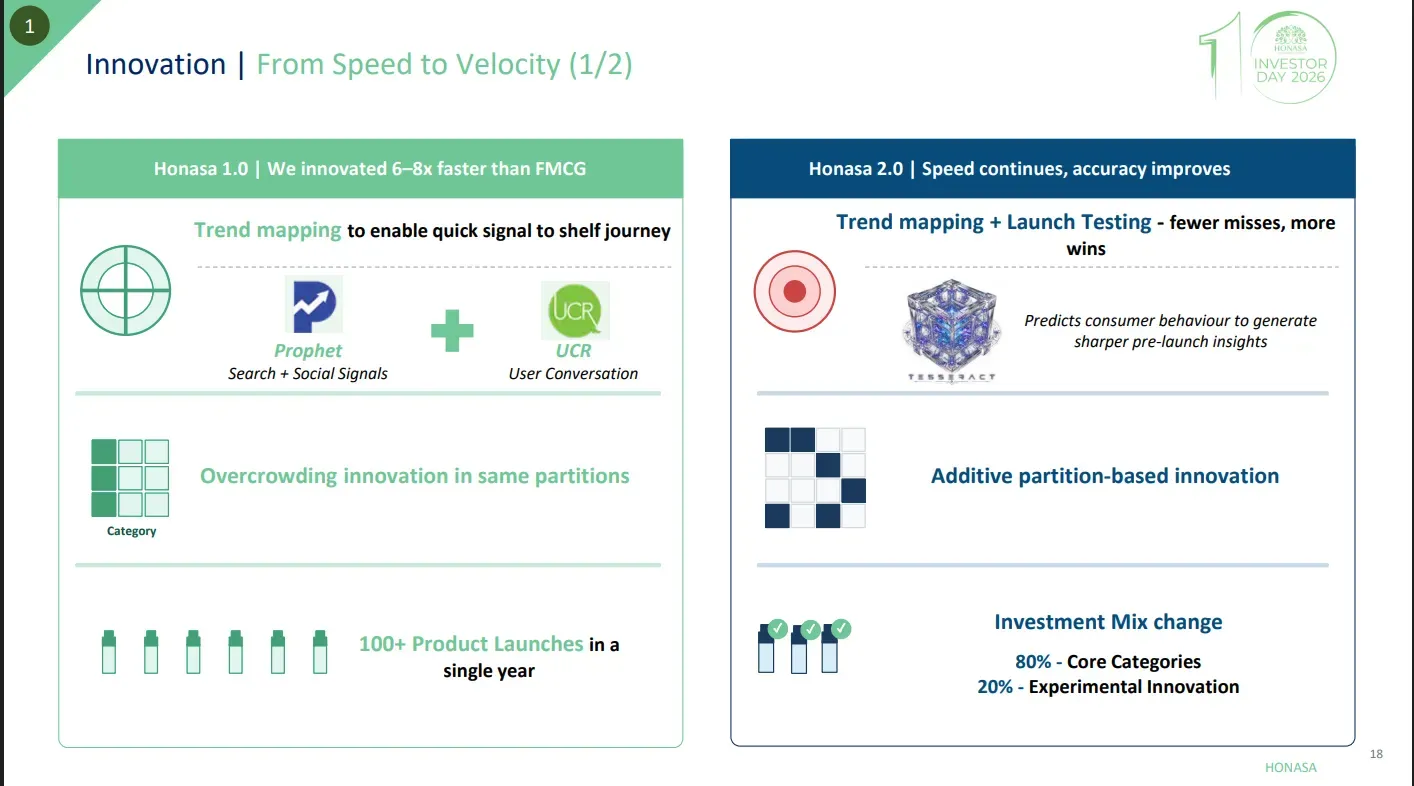
The evidence for a lasting edge is still thin
By the company's own account, AI-guided product bets have historically succeeded in fewer than 5% of cases, and one cited campaign lifted conversion from 88% to 90%, a real but modest gain. A structural question sits underneath all of this: the richest behavioural data, what a shopper searches, skips and buys late at night, gets generated on quick commerce apps, not brand websites. If data becomes the sector's real moat, it may end up sitting with the platform rather than the brand.
Why are margins under pressure right now?
Margins across the sector have narrowed over the past year, driven largely by input costs rather than the structural shifts described above. Palm oil, a key raw material for several categories, has become costlier because Indonesia, the world's largest exporter, is directing more of its output toward biodiesel production instead of export markets, tightening global supply. The sector also absorbed a one-off shock from changes to GST rates, which temporarily disrupted demand and channel inventory as retailers adjusted stock levels.
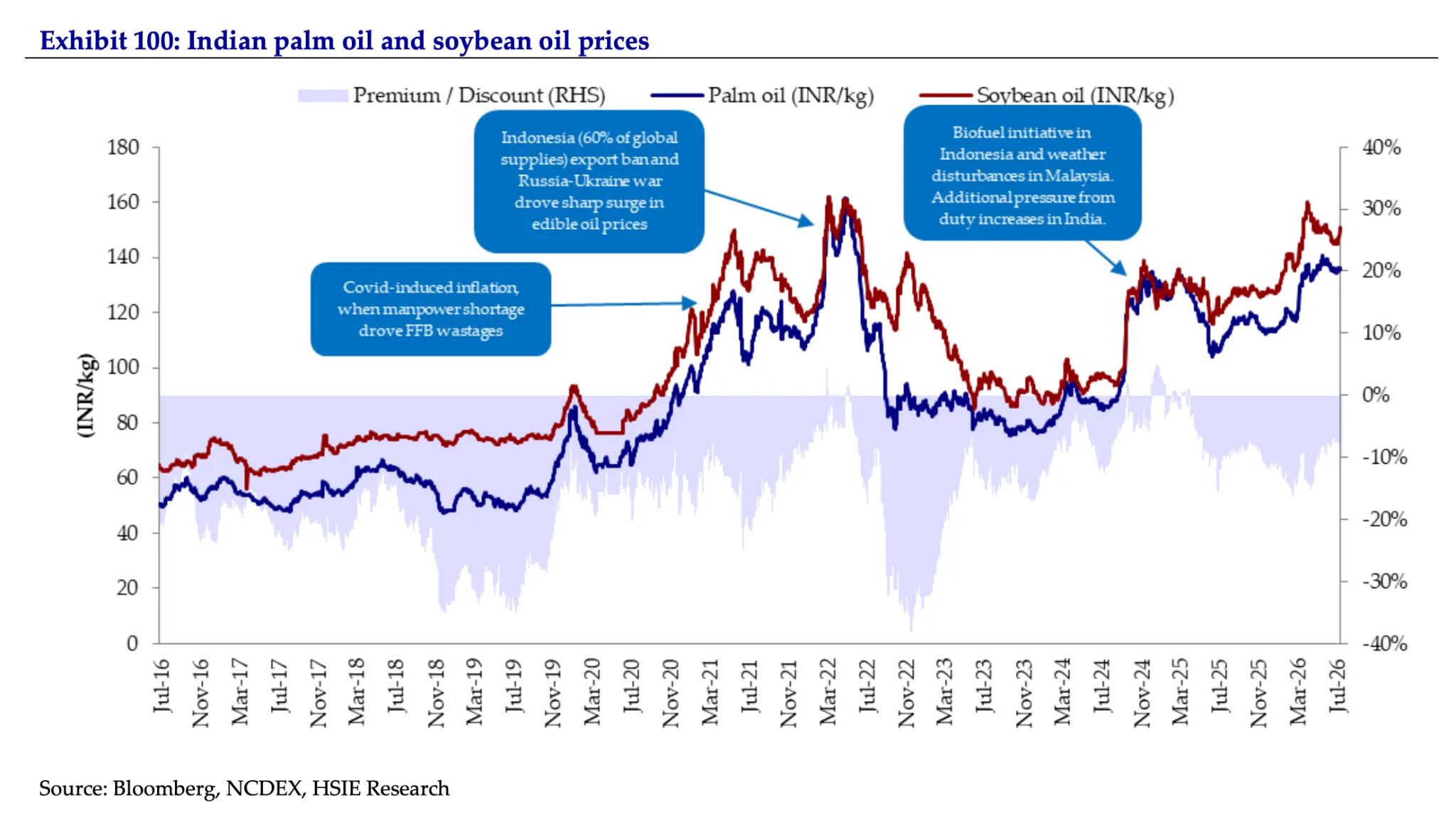
Both pressures look temporary. Input costs move in cycles, and tax-led disruption tends to fade once channel inventory resets. The bigger test for sector earnings is whether companies can convert the moat reset into topline growth, since further margin expansion from current levels looks unlikely to carry earnings on its own.
Can premiumisation offset the pressure?
The same consumer asking for personalised products is also willing to trade up, choosing a better face wash, a fancier coffee, or a premium single-serve pack over a value one. Quick commerce is where this shows up first. Baskets on these platforms already skew toward premium products, and companies report better category margins on richer product mixes sold through the channel.
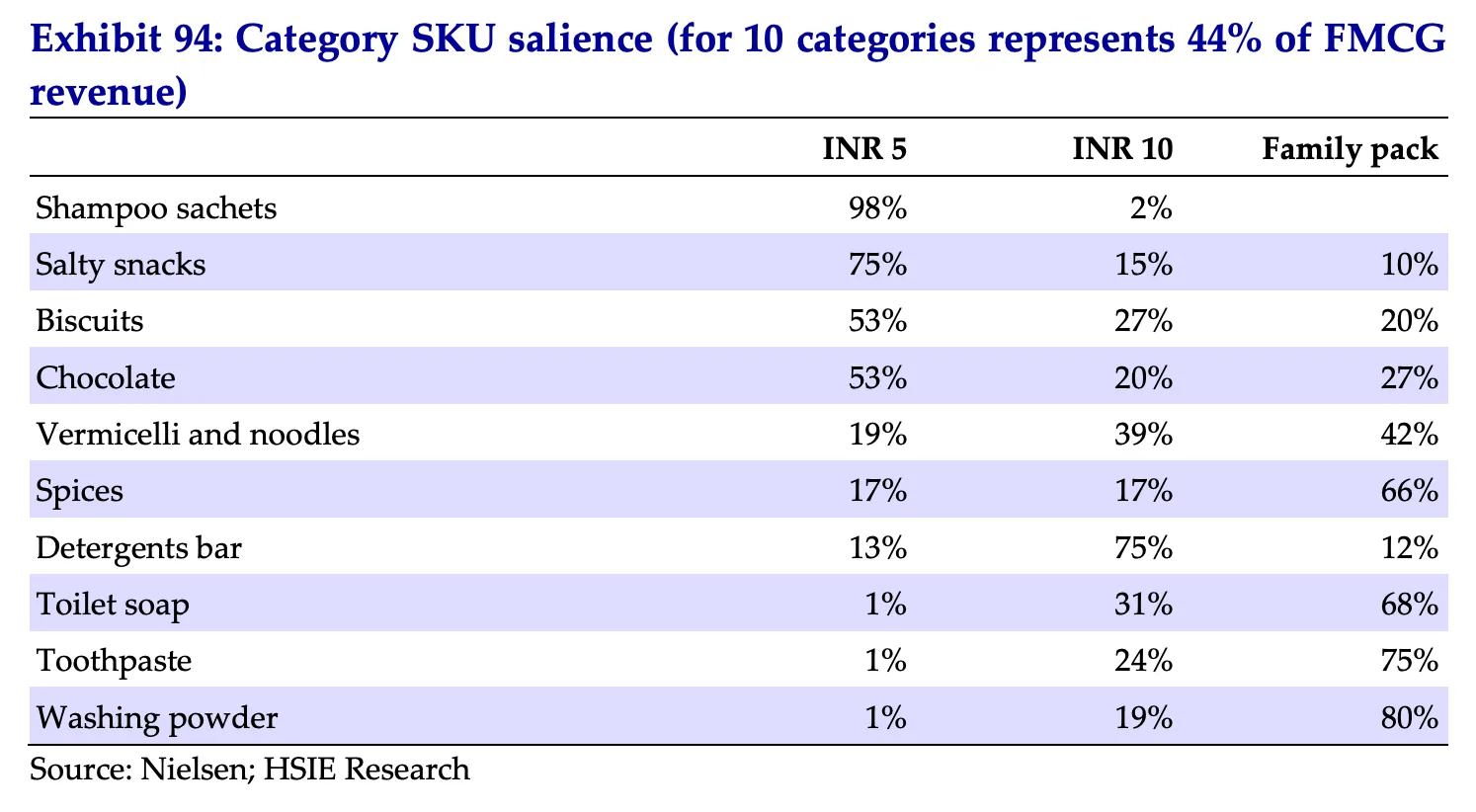
This creates an unusual arrangement. The platform charging brands higher listing fees and marketing spend is also the venue giving brands their best shot at reaching a consumer willing to pay more. For now, premiumisation offers the clearest sign that the reset can pay for itself rather than only adding cost.
What does the market think of this reset so far?
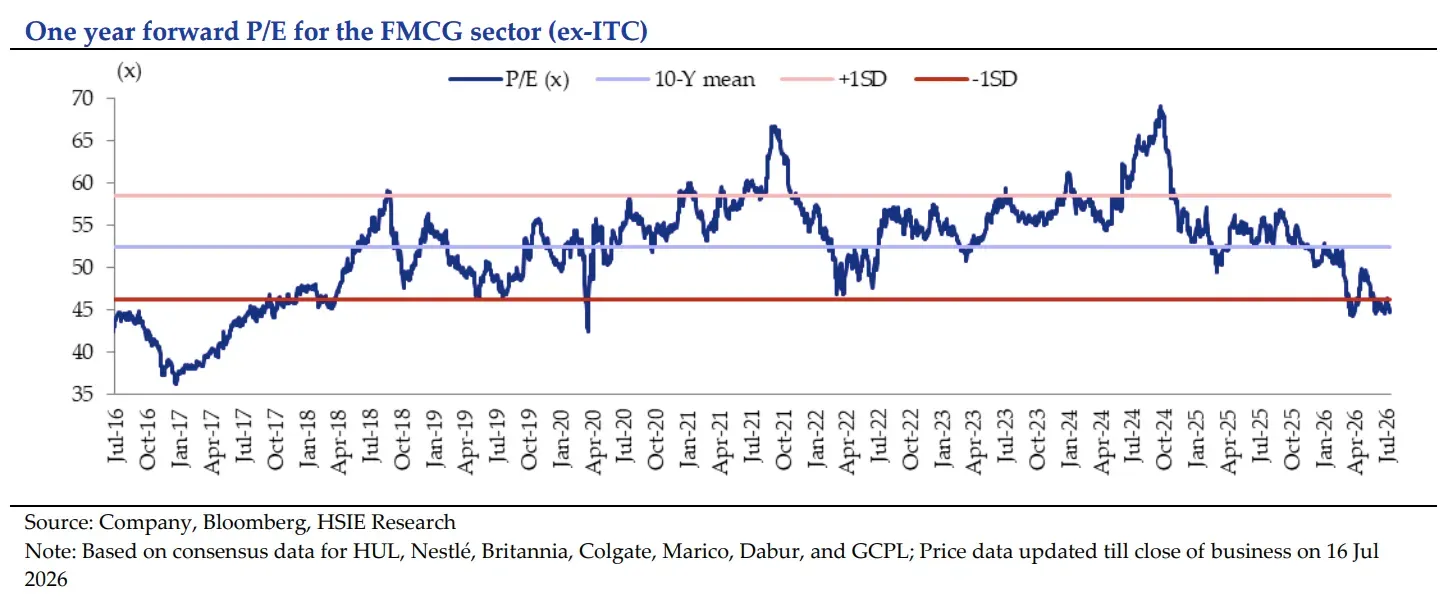
FMCG valuations have compressed toward the lower end of their historical range, and the sector's long-standing premium over the broader market has narrowed. Most companies now trade below their 3, 5 and 10-year average forward price-to-earnings ratios.
Company | Current 1Yr fwd. P/E | vs 3-Yr average P/E |
Colgate-Palmolive | 37x | -20% |
HUL | 43x | -14% |
Britannia | 44x | -12% |
Dabur | 36x | -18% |
Marico | 49x | +6% |
Nestle India | 67x | +1% |
Two names buck this trend. Nestle India and Marico both trade close to or above their historical averages, and both rank among the higher scorers of how companies are adapting across innovation, channel mix and inorganic activity. The market appears to already be sorting companies executing well from those adapting slowly, pricing each group differently rather than waiting for the reset to fully play out.
Follow this sector’s live moves
Sector-level performance across Indian markets, updated through the day.
What should investors and FMCG companies watch next?
The old scorecard for FMCG success, general trade reach and advertising spend, explains less of the outcome today. A newer scorecard has taken its place: how fast a company senses a shift in consumer preference, how well it manages a channel it does not fully control, and whether its acquisitions add real capability rather than just topline. For this reset, companies such as Godrej Consumer Products, Britannia, Honasa Consumer, Bikaji Foods, Emami and Gopal Snacks are favoured, while Colgate and HUL are facing steeper structural headwinds.
For investors, the metrics worth tracking have shifted too. Quick commerce and e-commerce revenue share, new product success rates, and direct distribution reach now say more about a company's prospects than headline revenue growth alone. Companies that treat this as a genuine reset, and not a passing cycle, stand the better chance of holding on to both their moat and their valuation over the next decade.