

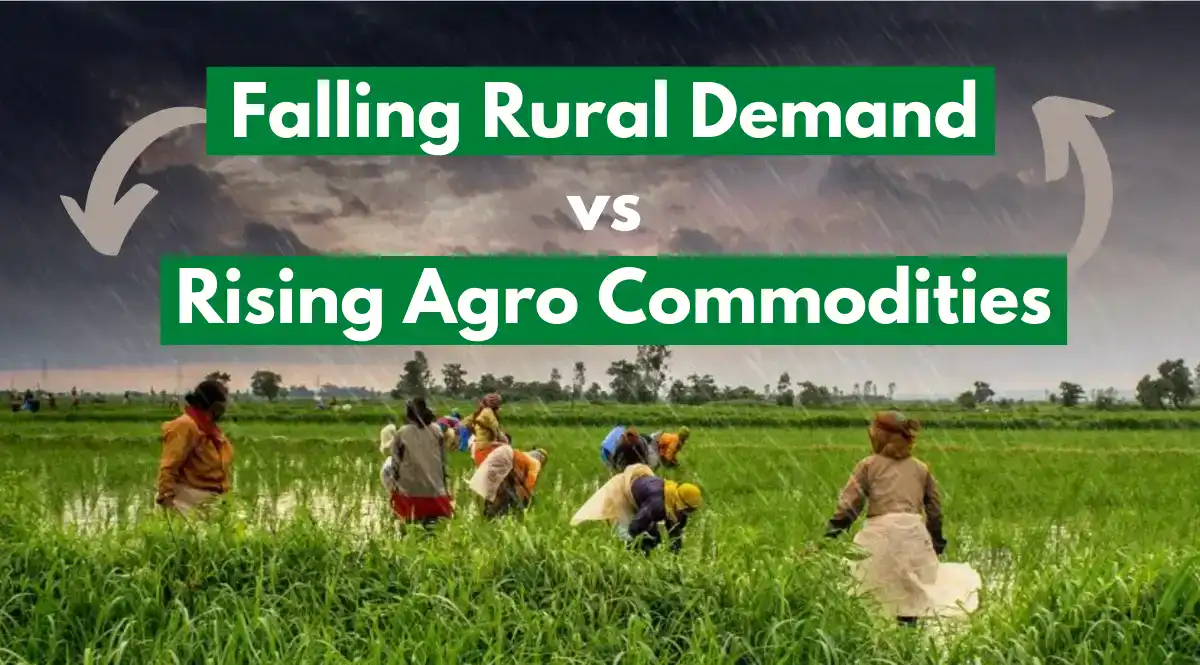
The rural economy that was just recovering from supply shock during the pandemic has been hit afresh by the commodity inflation fueled by the Ukraine-Russia crisis. As a result, many listed FMCG companies like Marico, Tata Consumer, Dabur, HUL, etc., see the demand slowdown continuing into the next quarter as they have been forced to raise prices.
A silver lining here could be that because of the Ukraine-Russia crisis, Indian agro commodities like wheat, soybean, cotton, and barley are seeing rising demand from the global markets as the commodity-producing Ukraine and Russia are hit. As a result, the profitability of these crops is expected to grow at least 30%. This, along with a good monsoon, as is being predicted, could lead to a rural economic recovery in FY23.

How can Rural Demand Recover
While the price hike in the agro commodities, where the Indian rural economy is the supplier, has been positive in light of the Ukraine crisis, the price rise in consumption-linked items where we are a consumer of inflation-linked commodities has been negative.
During the crisis, India making the most of the sale of wheat, soy barley, and other agro commodities will be positive. At the same time, the easing of tensions between Ukraine and Russia and easing of commodity inflation would be positive from the demand size.
Good monsoons, sustained reopening of the economy unmarred by lockdowns, and a supportive stance for growth from the central bank and government would be helpful. More subsidies and increased MNREGA wages would also not hurt the rural economy.
What is driving India’s agri-exports?
Ukraine is a major exporter of wheat, sunflower, barley, rapeseed, and maize, and Russia has substantial control over global exports of sunflower, wheat and barley. The on-going conflict between Russia & Ukraine has put immense pressure on the global agri-commodity market.
This season, India had a surplus of agricultural produce, and markets were anticipating prices to decline until the Russia-Ukraine conflict broke out. For the first time in years, India is eyeing to fill the void in global markets due to tightening supplies and rising grain prices from key exporting countries.
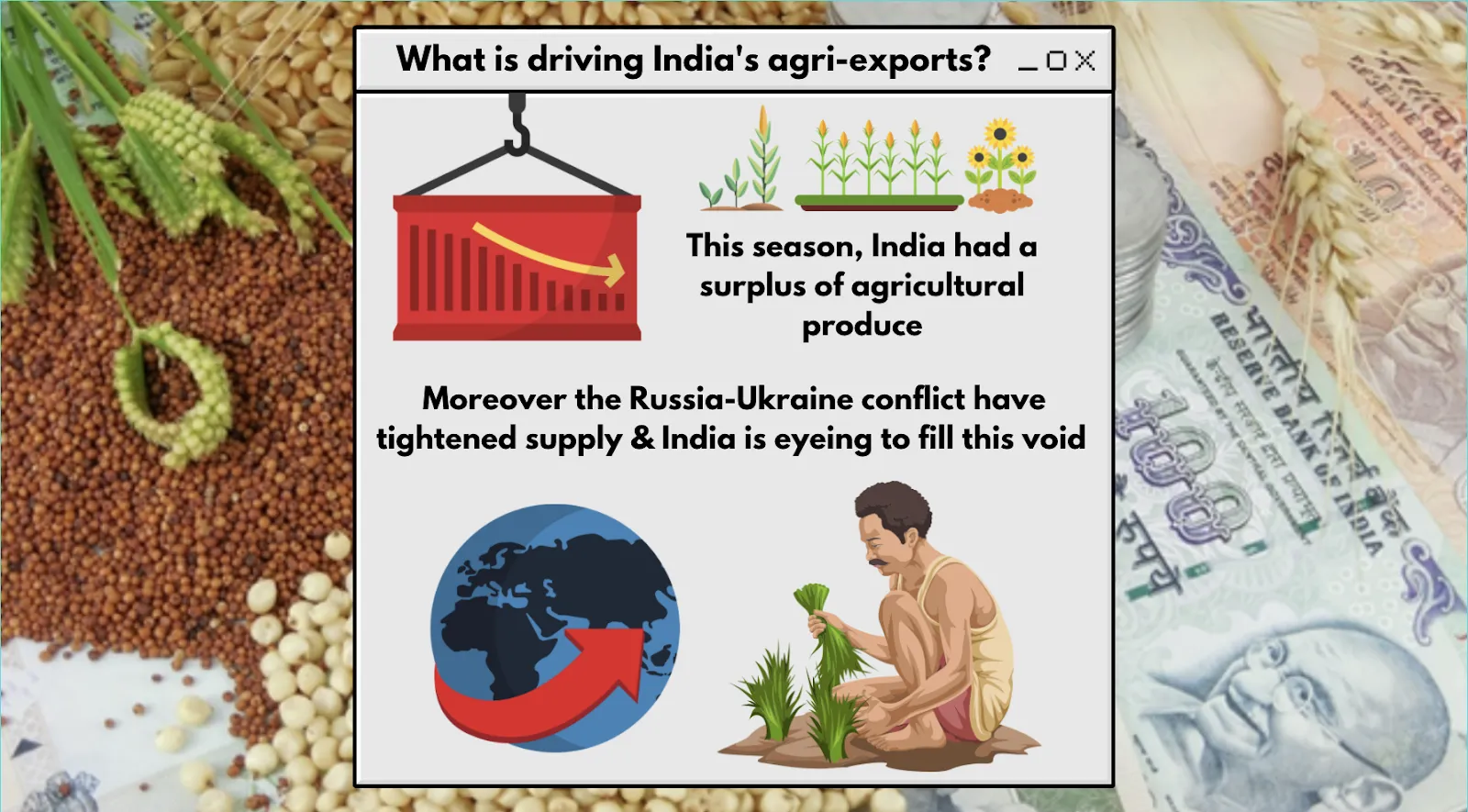 Also, India is in final talks to supply wheat to Egypt, the largest buyer in the world. Piyush Goyal (Minister of Commerce & Industry) has proclaimed that wheat exports are likely to cross USD 100 lakh tonnes this fiscal.
Agri-Commodities Prices At An All-Time High
Labour scarcity, as well as difficulties in obtaining fertilisers and other supplies during the lockdown resulted in immense difficulties for agrarians to do farming for essential agri-commodities.
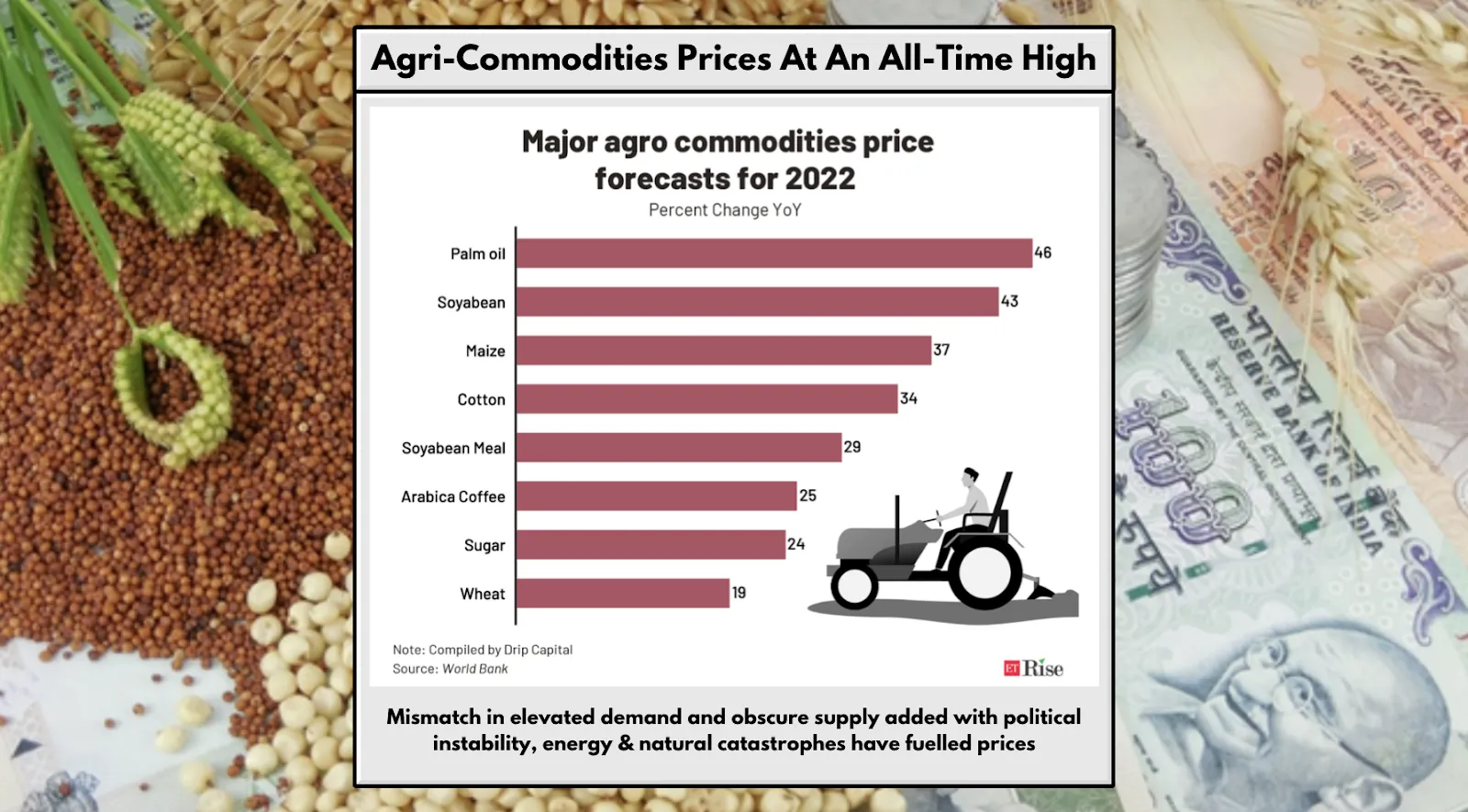
Further on, the huge mismatch in elevated demand and obscure supply added with political instability, energy & natural catastrophes have fuelled prices. Soybean, corn, cotton, sugar, coee, wheat, and palm oil are all staple commodities that have acknowledged steep rise in price due to incrementing labour, energy & sea freight costs.
Can India Lead in Global Agri-Commodity Exports?
Following the outbreak of the pandemic, India was able to take advantage of increasing demand for commodities. A huge surge in the exports of cereals were witnessed during this period.
India exported $616.96 Million worth of basmati rice in FY22 (Until May 2021) & an uprising in export of non-basmati rice was north of 136.04%. Essential agri-commodities in terms of export grew by 38% and wheat exports by 774%. Millets, maize & other coase grains exports witnessed a 238% growth.
Which stocks/sectors stand to gain the most from a revival in rural demand?
Consumption-linked sectors that are battered due to the rural demand slowdown will cheer the most as rural demand revives. FMCG, consumer staples, and even consumer discretionary sectors will receive a cheer. Paint, quick service restaurants, automobile sector - especially 2-wheelers will stand to get relief if rural demand comes back. Even travel and entertainment sectors would stand to gain from the revival.