

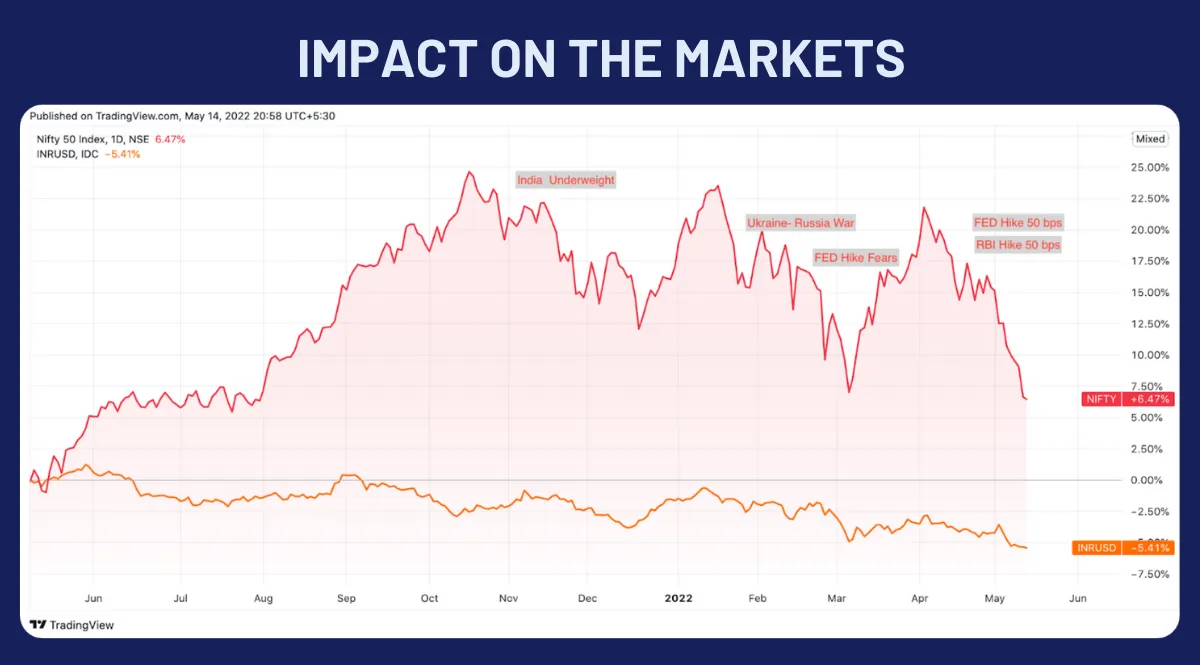
Let’s call it what it is. The markets have been routed over the past month. We were already struggling with volatility caused by several reasons. Still, the biggest triggers of all time - the US FED rate hike followed by the Indian RBI rate hike came last week and destroyed all equity market gains.
Why are these central banks hiking rates and destroying our portfolios? The answer is INFLATION. In this post, we will look at inflation and try to predict the way. So gear up!
What exactly is inflation?
Simply put, inflation is a general increase in the prices of goods and services in an economy. For example, imagine the bag of rice you purchased twelve months ago for Rs. 100 is now selling for Rs. 150, or the employee a company hired who worked at salary X suddenly is looking at a 2X salary - that is inflation.
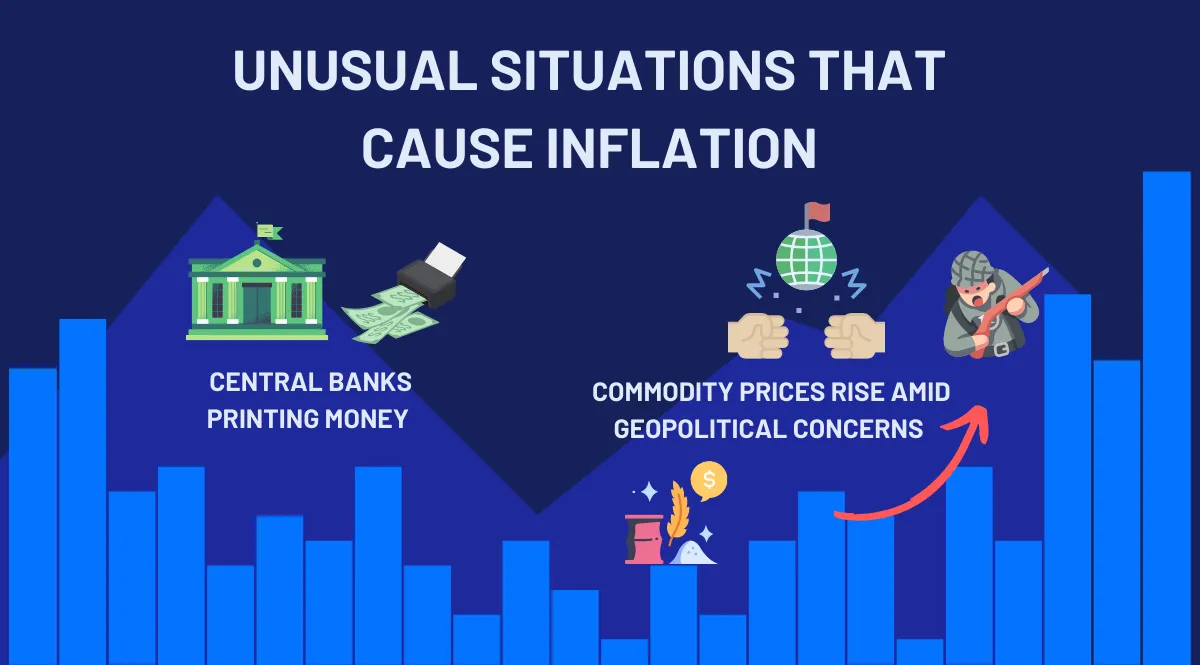
Inflation, while represented by a number, has various interpretations. At the same time, the basic understanding of the supply chain in a typical environment would say that when demand is more than supply, prices rise. But then there are unusual situations, like the central banks printing money during crises or commodity prices going crazy in geopolitical concerns, which causes transitory spurts in inflation. The dynamics of these various forces are too complex, and the simple inflation number has a vast depth of interpretation.
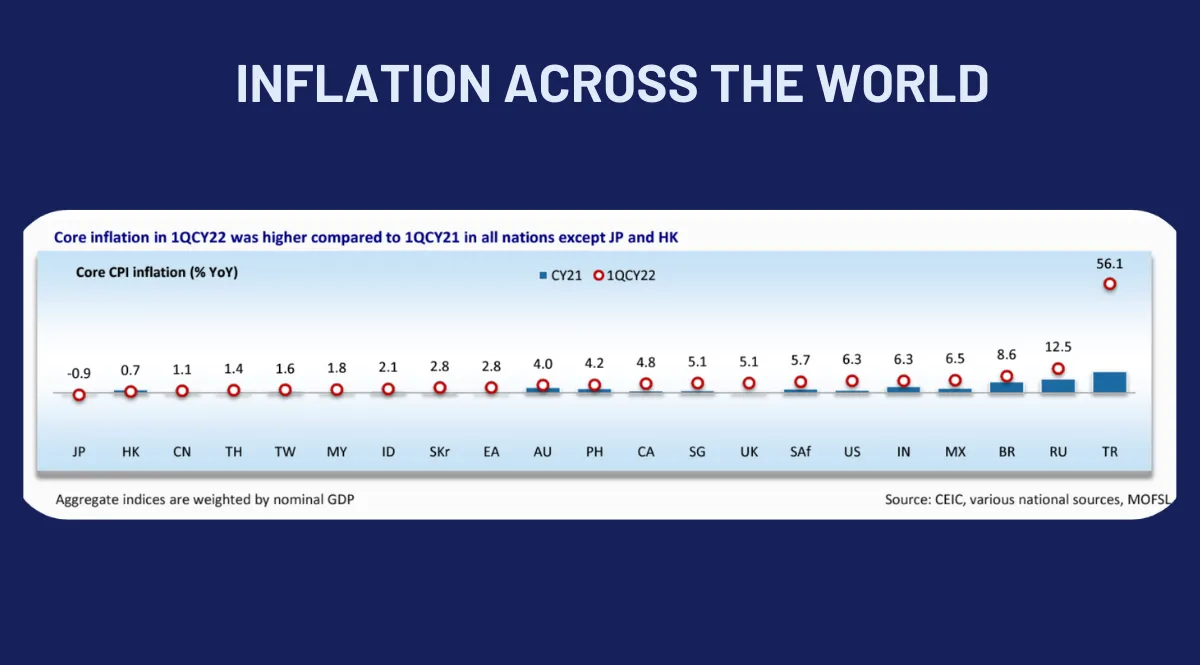
Inflation is on the rise all over the world
While inflation is nothing new for India, the US sees record inflation as it has never been before. Countries like Turkey and, closer to home, Sri Lanka, have seen their economies destroyed by the inflation problem.
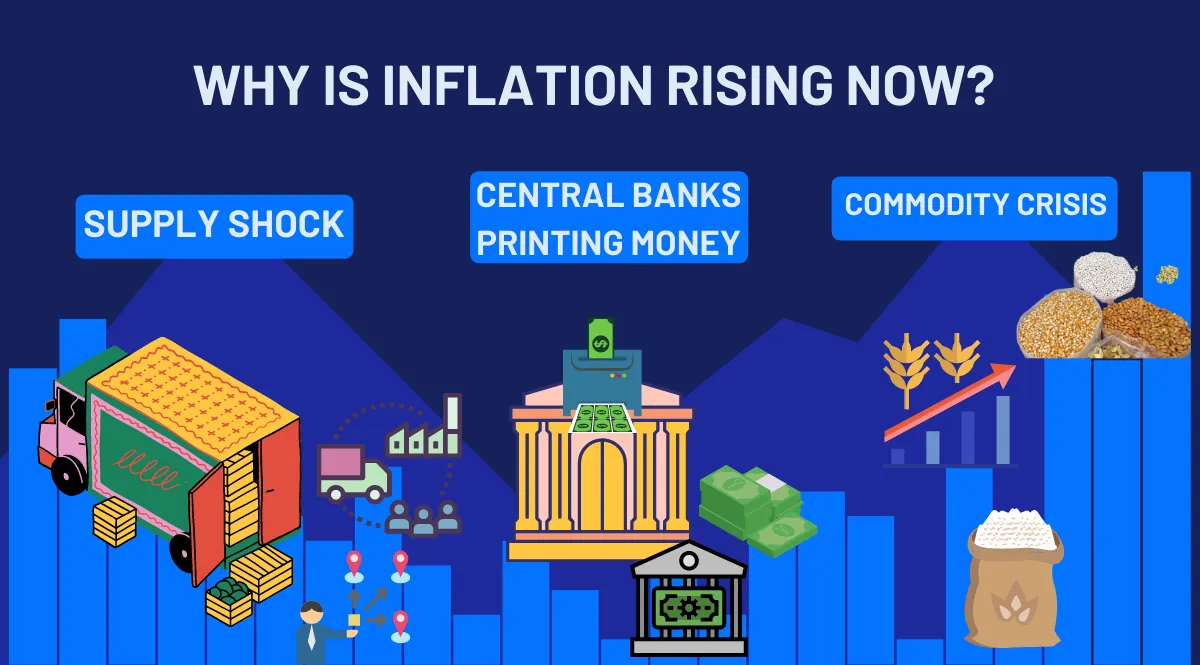
Why is inflation rising now?
Several reasons have escalated inflation, linked with the Covid crisis or the Russia-Ukraine war.
Supply Shocks
The economy came to a halt during covid and has still not recovered fully in many areas. When the supply of goods and services is disrupted by events like the pandemic or, more recently, by the disruption of supply by giant commodity-producing nations like Russia and China, the prices rise to meet such shocks.
Central Banks - Printing Money, Lowering Rates
The central banks printed money and lowered interest rates to boost the struggling economy during the covid crisis. A simple explanation is that the banks are printing record amounts of money to help people during covid, the amount of money chasing the small number of goods has increased, and prices are rising. While the dynamics are not that simple, the money printing by central banks has been a cause of inflation.
Commodity Crisis
The war has impacted the supply of commodities and will affect commodity markets and trade. These commodities have led to a sharp increase in prices. Many industries like FMCG, Cement, Agro-commodities, Automobiles, etc., have struggled with the commodity price rise.
The effect of rising rates
What has not fallen due to the rising rates? Of course, the US dollar hasn’t, nor has US bonds, but literally, everything has had a free fall post the rate hikes. Smallcaps have melted, and even the large-cap index has had a nose-dive.
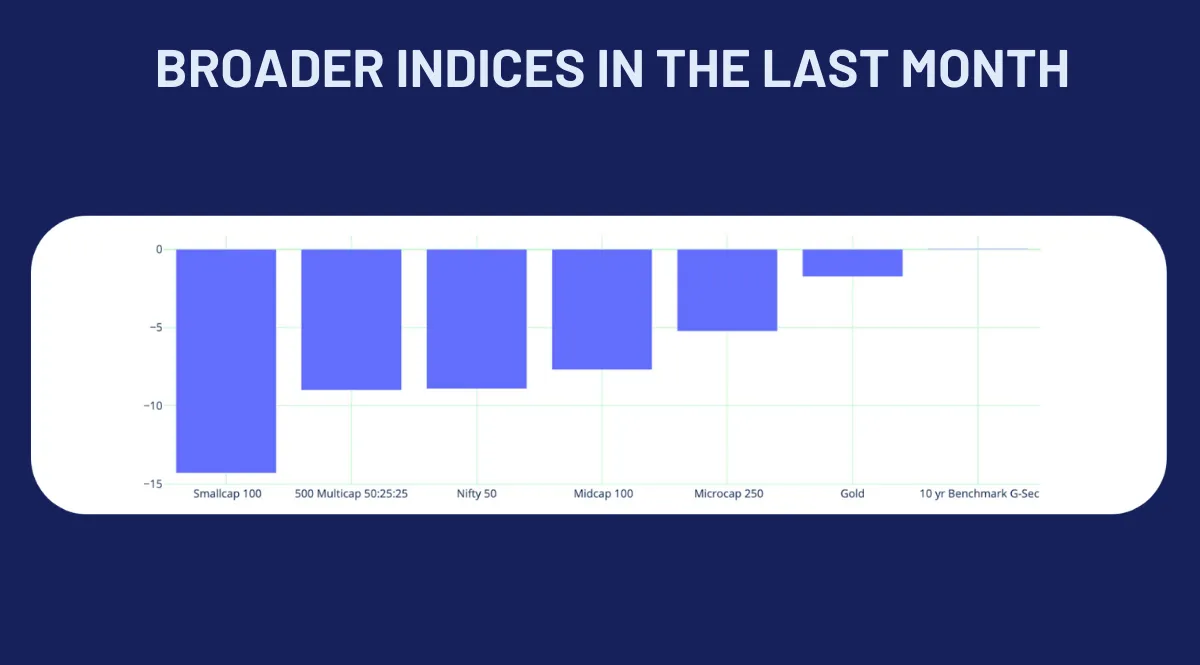
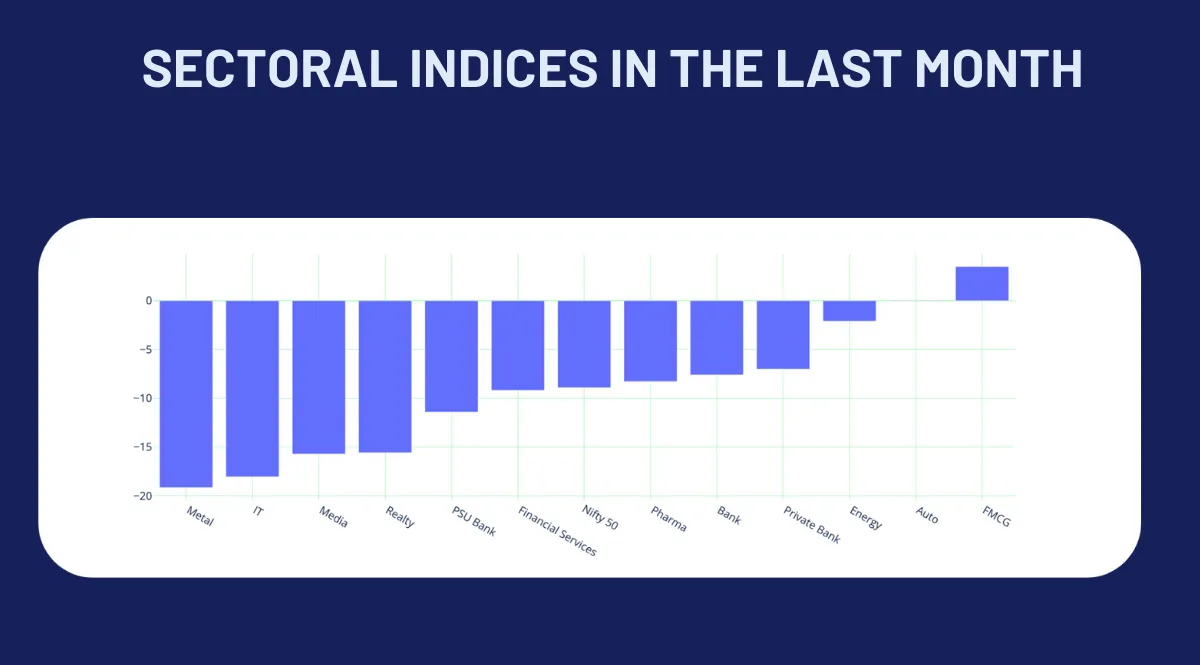
Most sectors have crashed and burned. Metals have had the worst effect due to commodity prices easing, real estate and infrastructure have melted due to the hikes, and IT is falling as an aftereffect of the US stock crash. Only FMCG, Autos, and Energy have held up, which are decisively defensive sectors.
What happens next?
As per the commentary by US FED and the RBI, the hikes will keep on coming, and they have a very hawkish stance. While inflation has shown signs of moderation in the US, it is still very extreme, and in India, the numbers are way over the safety limit set by the RBI. So stay braced for a high inflationary and high-interest rate environment.
Higher rates ripple throughout the economy. For example, mortgages, car loans, and business loans become expensive, slowing cash flow. This can lead businesses to amend or pause growth plans.
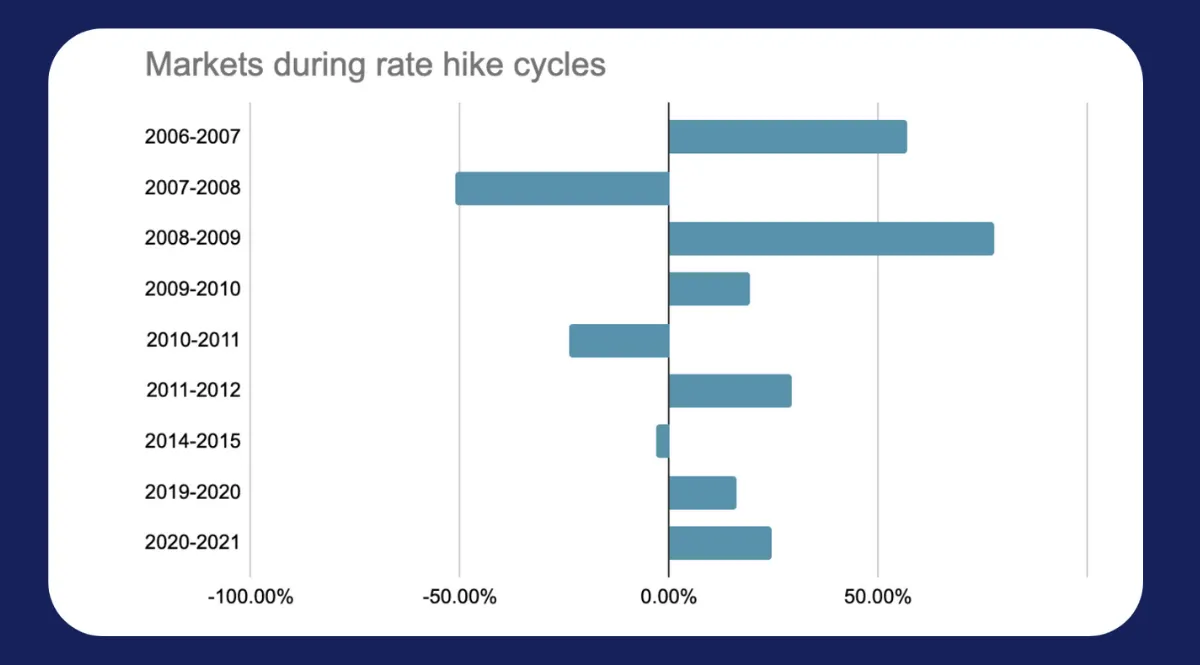
But all is not lost. In 6 out of 9 such rate hike cycles, the market has given a +16% average return, and we can expect appreciation when the volatility and uncertainty halt.
Which sectors to focus on and what to stay away from?
When rates rise, banks that are money lenders become attractive. If you are in the business of lending money, higher rates mean higher margins. Similarly, investors tended to look for stable companies, like commodities, indices’ stalwarts and established tech firms instead of highly valued growth stocks.
Stay away from cyclical firms till the volatility subsides and focus on defensives. FMCG, Oil & Gas, Banking, and Financials are the attractive sectors of the current moment, and even IT & Pharma would become attractive once the US market crash calms down.
We will be rebalancing our portfolios this week in light of this change with the expectation of persistent volatility in high inflation and a high-interest rate environment.