by Naman agarwal
Published On March 13, 2026
India is living through a once-in-a-century transition: from a coal-dominated, deficit-prone power system to a cleaner, digital, infrastructure-rich economy built around renewables, green grids, and data centers. This shift from coal to cloud is messy, uneven, and capital-intensive but it is also one of the biggest structural opportunities of the next two decades for policy makers, businesses, and investors.
For most of independent India’s history, coal has been the undisputed king of the power sector. It powered steel plants, railways, cement factories, refineries, and the rising middle class’s demand for lighting, fans, and air conditioners. For decades, coal-based thermal plants supplied around two-thirds to three-quarters of India’s electricity.
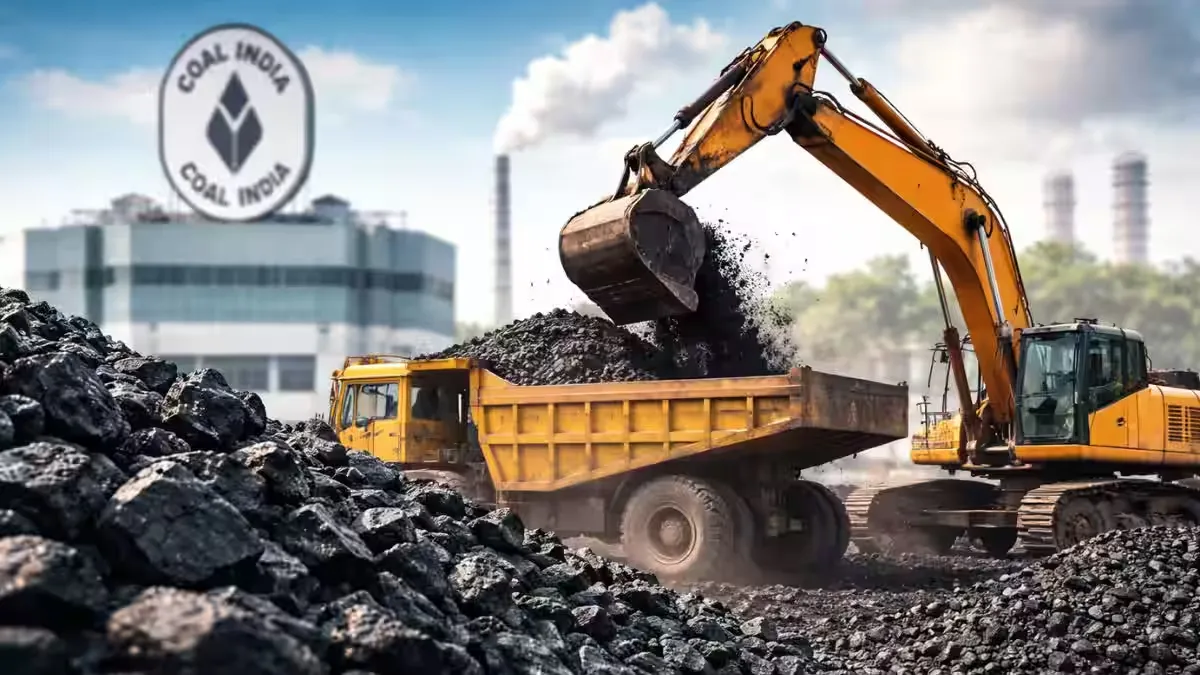
Coal had three big advantages for India:
It was domestically available in large reserves.
It was relatively cheap and easy to scale in gigawatt chunks.
It gave planners a predictable baseload to anchor an industrializing economy.
But this model came with serious costs.
First, pollution and health. Thick smog in major cities, sulfur and nitrogen oxides, particulate emissions, and fly ash from plants have worsened air quality and public health outcomes. Second, climate risk. As the world shifted towards decarbonisation, a coal-heavy system became a geopolitical and trade risk impacting everything from carbon border taxes to export competitiveness.
Third, coal itself became increasingly stressed. Domestic coal production struggled to keep up with demand in some years, imports rose, rail logistics got clogged, and old plants suffered from low efficiency and high heat rates. Financially, discoms accumulated losses, PPAs got renegotiated, and stranded assets became visible in the banking system.
Despite this, coal is not vanishing overnight. New plants are still being built or completed, life extensions are being considered, and flexible operation is evolving to balance renewables. But the centre of gravity is shifting.
The story from here on is not coal vs renewables, but coal and renewables, with a clear long-term trend towards decarbonisation and digitalisation.
India’s move from conventional power to sustainable infrastructure is not driven by idealism alone. It’s driven by four hard economic and strategic realities.
India’s energy demand is set to grow faster than almost any major economy over the next 20 years. Relying solely on imported oil, gas, and even coal would expose the country to price shocks, supply disruptions, and geopolitical blackmail.
Sustainable infrastructure solar, wind, hydro, nuclear, storage, green hydrogen, and even energy-efficient buildings reduces the long-term dependence on volatile imports. Every megawatt of solar and offshore wind installed, every MWh saved through efficiency and demand response, is a hedge against future instability.
India has made explicit pledges on non-fossil capacity and net-zero timelines. Global investors, sovereign funds, and climate-focused pools increasingly allocate capital based on ESG filters. Infrastructure pipelines that are dirty, opaque, or politically risky struggle to raise long-term money; clean, well-structured sustainable projects rarely do.
This has three effects:
Cheaper global capital flows into renewables, transmission, and data-centric infrastructure.
Domestic banks and NBFCs begin to tilt portfolios towards cleaner assets.
Corporate India starts to view decarbonisation as a competitive necessity, not just CSR.
The economics of solar and wind power have transformed. Utility-scale solar tariffs have fallen dramatically over the past decade, making them competitive or cheaper than many new coal plants on a levelized cost basis in India.
Battery prices have been on a downward curve, opening up grid-scale storage, round-the-clock renewable tenders, and hybrid plants (solar + wind + storage). Smart grids, digital meters, AI-based demand forecasting, and automation reduce losses and improve reliability.
In parallel, the “cloud” side of the story: data centres, AI compute, and cloud storage demands power that is cheap, reliable, and increasingly green. Big tech tenants and domestic digital champions are all under pressure to decarbonise their power footprints.
India’s urbanisation and digitalisation are happening at the same time. Millions of people are entering cities while simultaneously adopting smartphones, streaming, fintech, and e-commerce. Every layer metro lines, EV chargers, warehouses, data centres add to electricity demand.
A coal-only system cannot cope with these complex, peaky, and geographically dispersed loads in a cost-effective, climate-compatible way. Sustainable infrastructure distributed solar, microgrids, smart meters, and integrated transport-power planning is the only long-term coherent pathway.
When we say “sustainable infrastructure”, power is the core. India’s future energy system will likely rest on a few key pillars.
Year | Coal Share of Capacity (%) | Renewables (Solar+Wind+Others) (%) | Hydro (%) | Nuclear (%) | Key Theme |
2010 | 65 | 10 | 20 | 5 | Coal-dominated, early solar phase |
2015 | 60 | 15 | 20 | 5 | National Solar Mission ramps up |
2020 | 55 | 25 | 16 | 4 | Utility-scale solar takes off |
2025 | 50 | 32 | 14 | 4 | Hybrid & RTC RE gain traction |
2030* | 40 | 42 | 13 | 5 | Storage + green grid era |
Solar is the poster child of India’s energy transition. You see it on:
Massive utility-scale parks in arid regions.
Rooftop panels on factories, commercial buildings, and homes.
Floating solar arrays on reservoirs and dams.
The economics are simple: once installed, solar has no fuel cost. The variability of solar (no generation at night and dips in monsoon) is being managed by:
Geographic diversification across states.
Hybridisation with wind.
Increasing use of storage and flexible thermal/hydro to balance.
Rooftop and behind-the-meter solar also change consumer behaviour. Households, MSMEs, and large corporations can reduce their grid draw, hedge against price increases, and sometimes earn from net metering.
Wind complements solar because of different generation profiles stronger at night and in specific seasons. Offshore wind is emerging as a strategic focus, especially along coastal states, to add heavy, reliable capacity closer to demand centres and industrial clusters.
The real innovation now is hybrid configurations: solar + wind + storage, tied together with a single PPA. These provide “firm” or round-the-clock renewable power, making it easier for discoms and industrial users to rely on renewables without back-up coal blocks of the same size.
Without storage, high renewable penetration stresses the grid: midday surpluses, evening deficits, frequency fluctuations. Storage solutions lithium-ion batteries, pumped hydro reservoirs, emerging chemistries are the missing bridge between variable supply and flexible demand.
Grid-scale battery projects are being tendered to provide:
Frequency regulation and ancillary services.
Peak shaving during high-demand hours.
Backup for renewables-heavy states and industrial clusters.
Over time, EV batteries themselves (through vehicle-to-grid models) may become another distributed storage asset in the system.
None of this works without wires and intelligence.India’s transmission expansion over the next decade is a mega theme by itself with thousands of circuit kilometres of high-voltage lines connecting renewable-rich regions to load centres. Green energy corridors, cross-border links, and high-voltage DC lines will be crucial.
At the distribution end, smart meters enable:
Time-of-day tariffs.
Accurate billing and loss reduction.
Remote disconnection/reconnection.
Demand response programs where large consumers can curtail use in exchange for incentives.
A greener grid is not just about cleaner electrons; it is about an infrastructure layer that is more intelligent, flexible, and resilient.
If coal plants were the “factories” of the 20th century, hyperscale data centres are the factories of the digital age. They convert electricity into computation, storage, and digital services.Data centres run 24x7, demand very high uptime (often 99.99% or higher), and need both primary power and backup. As cloud adoption, video streaming, AI, and fintech explode, India is seeing a surge in:
Hyperscale data campuses in and around major metros.
Edge data centres in Tier-2 cities.
Colocation sites catering to banks, OTT platforms, and enterprise workloads.
Every server rack is a load point. For this ecosystem, reliable and affordable electricity is non-negotiable.
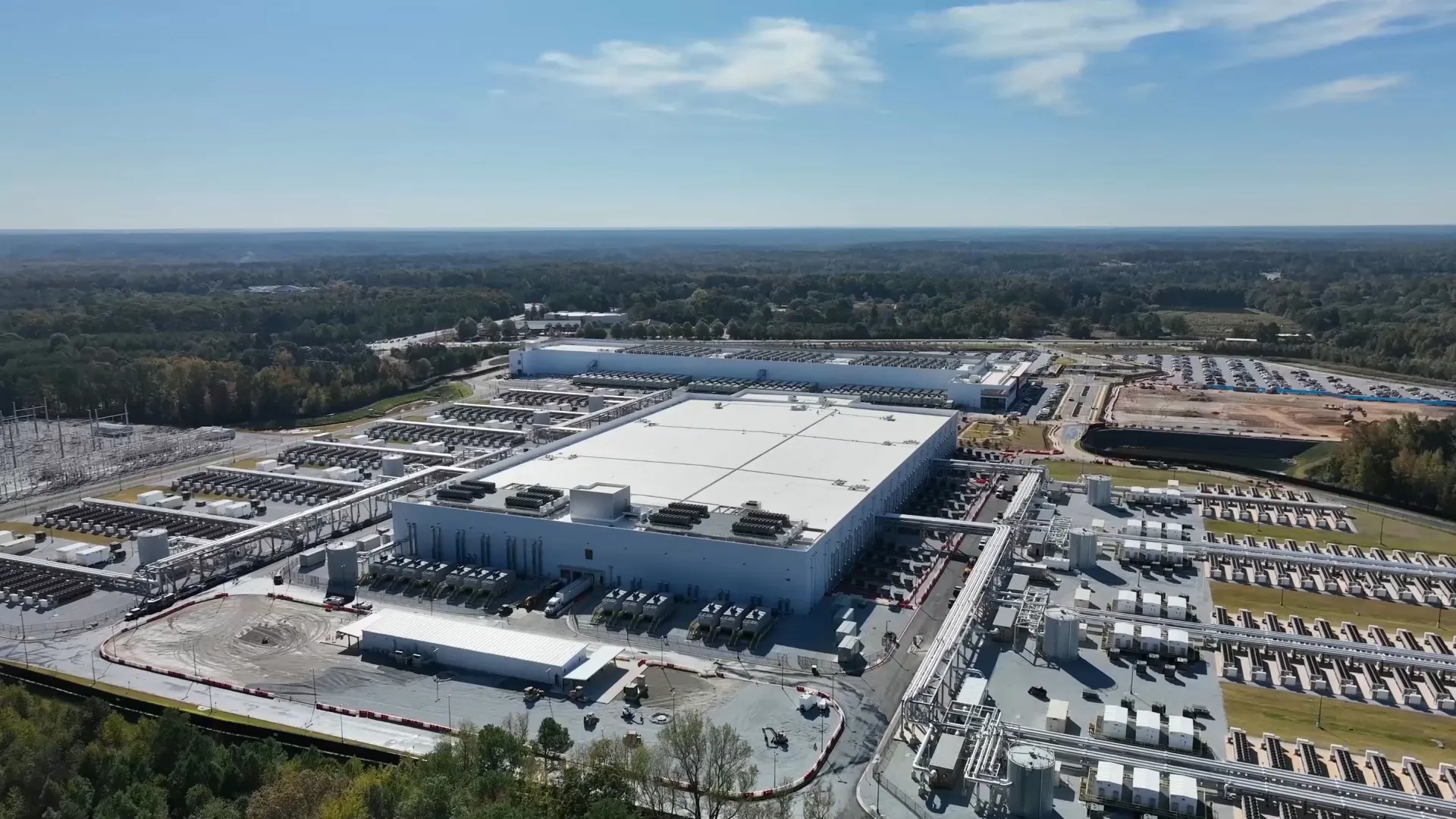
Large tenants increasingly demand green power, not just power. They are signing long-term renewable power contracts, open access deals, and participating in green attribute markets to clean up their energy mix.
We are already seeing models like:
On-site solar plus grid backup.
Off-site solar/wind farms tied via open access.
Round-the-clock renewable contracts backed by storage.
Because many global cloud players have their own net-zero commitments, they exert pressure up the chain. This indirectly accelerates renewable adoption and transmission build-out in India.
Data centres are not just about power; they are about cooling and water usage too. Sustainable infrastructure for the cloud includes:
Efficient cooling designs (free cooling, liquid cooling, AI-optimised airflow).
Location choices that reduce cooling and land cost.
Recycled water for cooling to reduce freshwater stress.
So the coal-to-cloud story is not “closed coal plant, opened data centre” in the same place. It is a sectoral transformation: from energy-guzzling, carbon-heavy assets to energy-hungry but increasingly decarbonised digital infrastructure.
Theme | What It Is | Role in Transition | Typical Investors/Players |
Utility Solar & Wind | Large-scale RE parks and hybrid projects | Replace incremental coal, lower tariffs | IPPs, infra funds, PSUs |
Rooftop & C&I Solar | On-site panels for homes, MSMEs, corporates | Cuts grid demand, hedges tariffs | EPCs, OPEX developers, DISCOM tie-ups |
Grid-Scale Storage | Batteries, pumped hydro | Balances variable RE, enables RTC contracts | Developers, utilities, PE funds |
Transmission Corridors | HV lines, green corridors | Move RE from resource-rich to demand centres | Transmission PSUs, EPCs |
Smart Distribution | Smart meters, automation, loss reduction | Improves DISCOM health, enables dynamic pricing | DISCOMs, meter OEMs, SaaS providers |
Data Centres & Cloud | Hyperscale and edge data infrastructure | New, power-hungry “factories” demanding green power | REITs, global cloud, local infra players |
EV & Charging Infra | Chargers, depots, grid integration | Shifts oil demand to electricity, new load shape | Auto OEMs, utilities, city agencies |
This transition is not linear or painless. Several bottlenecks and risks can slow or distort the journey.Coal will continue to supply a large chunk of India’s electricity for years. Shutting it abruptly would mean blackouts, industrial disruptions, and social backlash. Many coal plants are relatively young by global standards.
The near-term reality is:
Existing coal fleets will be run more flexibly to balance renewables.
New coal additions, if any, will likely be more efficient and tightly regulated.
Retrofit investments (FGD units, pollution controls, flexibility upgrades) will be required.
This creates a complex capex landscape: money is needed both to decarbonise and to clean/upgrade the old system.
Large-scale renewable parks and transmission corridors require land and right-of-way. This triggers:
Environmental concerns (biodiversity, forests, wetlands).
Local community resistance if compensation is inadequate or process opaque.
Litigation delays that can stall multi-year investments.
Balancing speed with fairness and ecological sensitivity will determine how quickly India can scale sustainable infrastructure without social backlash.
While global capital is abundant for green projects, investors want:
Policy stability and clarity on tariffs and open access rules.
Contract enforceability and low counterparty risk.
Regulatory certainty on issues like grid charges, banking of power, and carbon markets.
Policy flip-flops, retrospective changes, and delayed payments can spook capital even if the long-term story remains attractive.
For businesses and investors, the shift from coal to cloud-backed, sustainable infrastructure opens multiple opportunity buckets.Developers in solar, wind, hybrid, and storage have a multi-decade runway. Competitive edges will depend on:
Access to cheap capital and bankable PPAs.
Site selection and execution capability.
Ability to bundle storage and provide firm power.
Players that can move from “megawatt developers” to “energy service providers” (offering integrated solutions to discoms and corporates) will have a strategic edge.
Transmission EPC, tower manufacturers, cable providers, and grid software companies stand to benefit from the green corridor expansion. On the distribution side:
Smart meter rollouts create opportunities in hardware, communications, and analytics.
Grid management software, AI-based forecasting, and automation will be increasingly vital.
This is where power and digital truly fuseturning the grid into a data-rich, controllable asset.
Data centre operators, REITs, hyperscale partners, and local infra funds can ride the “cloud” wave. Opportunities include:
Building green data campuses close to fibre and power.
Tying up long-term renewable PPAs.
Offering “green cloud” as a premium service to climate-conscious tenants
The adjacency opportunities logistics parks, warehousing, industrial corridors create an ecosystem of sustainable infrastructure around these hubs.
India’s transition from conventional power to sustainable infrastructure will not look like Europe’s or the US’s. It will follow its own path, shaped by:
Faster demand growth.
Lower per capita consumption starting point.
Different political economy and social priorities.
Coal will not suddenly disappear. It will gradually be pushed to the margins kept as backup, run flexibly, and cleaned up as much as feasible. Renewables will keep gaining share, helped by falling costs, rising corporate demand, and global climate capital.
The “cloud” layer of data centres, 5G networks, and digital public infrastructure will drive incremental demand that is both intense and increasingly green. The backbone of this system will be a smarter, more interconnected, and more resilient grid.
For India, the question is no longer whether it will shift from coal to sustainable infrastructure, but how fast, how fairly, and how intelligently it can execute that shift.
For investors and builders, this is not just an ESG theme; it is the central macro story of the next 10–20 years where power, infrastructure, and digital meet.
Discover investment portfolios that are designed for maximum returns at low risk.
Learn how we choose the right asset mix for your risk profile across all market conditions.
Get weekly market insights and facts right in your inbox


It depicts the actual and verifiable returns generated by the portfolios of SEBI registered entities. Live performance does not include any backtested data or claim and does not guarantee future returns.
By proceeding, you understand that investments are subjected to market risks and agree that returns shown on the platform were not used as an advertisement or promotion to influence your investment decisions.
"I was drawn to Wright Research due to its multi-factor approach. Their Balanced MFT is an excellent product."

By Prashant Sharma
CTO, Zydus
By signing up, you agree to our Terms and Privacy Policy
"I was drawn to Wright Research due to its multi-factor approach. Their Balanced MFT is an excellent product."
By Prashant Sharma
CTO, Zydus
Skip Password
By signing up, you agree to our Terms and Privacy Policy
"I was drawn to Wright Research due to its multi-factor approach. Their Balanced MFT is an excellent product."
By Prashant Sharma
CTO, Zydus
"I was drawn to Wright Research due to its multi-factor approach. Their Balanced MFT is an excellent product."
By Prashant Sharma
CTO, Zydus
Log in with Password →
By logging in, you agree to our Terms and Privacy Policy
"I was drawn to Wright Research due to its multi-factor approach. Their Balanced MFT is an excellent product."
By Prashant Sharma
CTO, Zydus
Log in with OTP →
By logging in, you agree to our Terms and Privacy Policy
"I was drawn to Wright Research due to its multi-factor approach. Their Balanced MFT is an excellent product."
By Prashant Sharma
CTO, Zydus
Answer these questions to get a personalized portfolio or skip to see trending portfolios.
Answer these questions to get a personalized portfolio or skip to see trending portfolios.
(You can choose multiple options)
Answer these questions to get a personalized portfolio or skip to see trending portfolios.
Answer these questions to get a personalized portfolio or skip to see trending portfolios.
Answer these questions to get a personalized portfolio or skip to see trending portfolios.
(You can choose multiple options)
Investor Profile Score
We've tailored Portfolio Management services for your profile.
View Recommended Portfolios Restart