Since late February 2026, headlines about airstrikes on Iran, missile launches, and talk of regime change have dominated global news. For Indian investors, this is not just geopolitics, it directly affects oil prices, the rupee, inflation, and stock market returns.
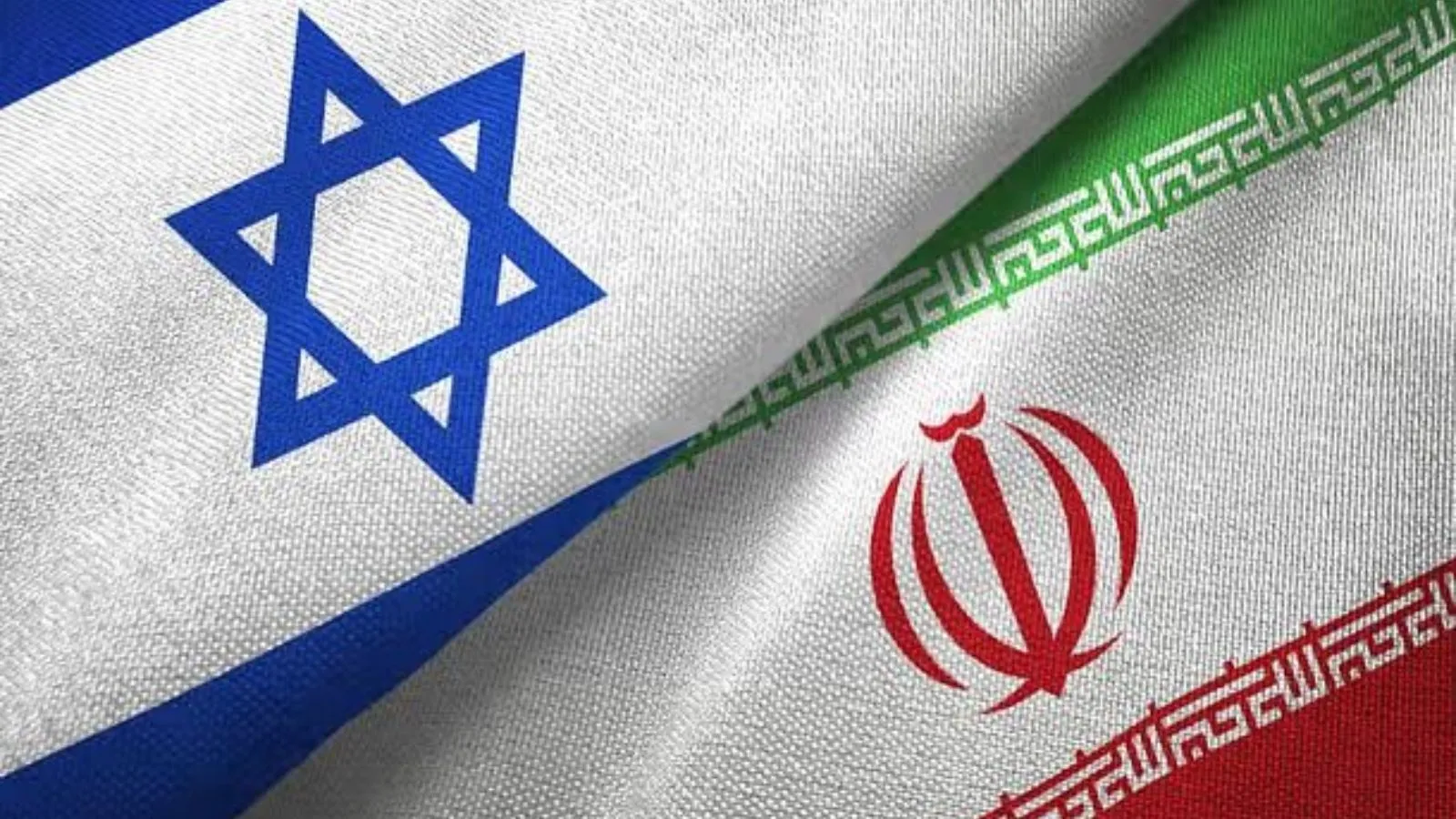
The current phase of the Iran–Israel conflict escalated sharply on 28 February 2026, when Israel and the United States launched a coordinated joint attack on multiple sites in Iran. Israel codenamed the operation Roaring Lion, while the US Pentagon called it Operation Epic Fury.
The opening wave of strikes targeted Iranian leadership, key military commanders, nuclear facilities, missile bases, and government buildings across cities like Tehran, Isfahan, Qom, Karaj, and Kermanshah. Reports confirm that Iran’s Supreme Leader Ali Khamenei was killed in these strikes, making this one of the most dramatic regime shocks in the region in decades.
Date (2026) | Key events | Notes / Market‑relevant angle |
27 Feb | Donald Trump authorises Operation Epic Fury while en route to Texas, giving the go‑ahead for coordinated US strikes on Iran. | Sets stage for a large, pre‑planned campaign rather than a one‑off strike, raising expectations of sustained geopolitical risk. |
28 Feb | Israel and the US launch massive joint attacks on Iran, codenamed Operation Roaring Lion (Israel) and Epic Fury (US). | War formally begins; markets react to risk of broad Middle East escalation and potential supply disruption in the Strait of Hormuz. |
28 Feb | Decapitation strikes hit Tehran’s Pasteur district and other leadership/military sites; Supreme Leader Ali Khamenei and multiple senior Iranian security officials are killed. | Assassination of top leadership signals regime‑change intent, increasing uncertainty premium in oil and risk assets. |
28 Feb | Strikes also hit cities including Qom, Isfahan, Kermanshah and Karaj; US forces target command‑and‑control, missile, radar and UAV sites. | Extent of strikes shows this is a full‑scale campaign against Iran’s military infrastructure, not just symbolic retaliation. |
28 Feb–1 Mar | Iran launches Operation True Promise IV, firing missiles and drones at Israeli and US‑linked targets in Israel, Bahrain, Qatar and UAE. | Raises risk for Gulf energy infrastructure and shipping, immediately feeding into higher crude price expectations. |
1 Mar | US–Israeli strikes hit additional sites in Tehran (Azadi Stadium/Square, state TV, Red Crescent Peace Building) and security HQs like Thar‑Allah. | Signals that command, propaganda and internal‑security infrastructure are sustained targets, reinforcing regime‑change narrative. |
2 Mar | US–Israeli forces strike Natanz Nuclear Facility and multiple airbases; Iranian Red Crescent reports over 550 deaths. | Nuclear facility hit increases fears of long war and possible Iranian asymmetric responses around Hormuz and via proxies. |
2 Mar | Strikes extend to Hezbollah‑linked areas in Lebanon (Beirut, Beqaa Valley, southern Lebanon). | Confirms regionalisation of conflict, raising probability of multi‑front escalation and sustained Middle East risk premium. |
3 Mar | War “dramatically expands”; nine countries are now involved in some form, according to conflict trackers. | Multi‑country involvement increases complexity and uncertainty, which typically keeps volatility and safe‑haven demand elevated. |
3–4 Mar | Continued heavy bombing in Tehran, Isfahan, Kermanshah, Shiraz and other cities; Iranian casualty estimates rise further. | Persistent strikes suggest conflict will not end quickly, reinforcing scenarios of higher‑for‑longer oil prices. |
4–5 Mar | Global think tanks, media and market strategists highlight risks to the Strait of Hormuz and flag India and other oil‑importing EMs as most exposed to a crude shock. | This is the link to Indian markets: potential disruption of Gulf crude flows via Hormuz → higher oil, weaker INR, pressure on inflation, RBI, and equities. |
Iran responded with Operation True Promise IV, launching missiles and drones at Israeli and US-linked targets and threatening to use its leverage over the Strait of Hormuz, one of the world’s most critical oil chokepoints. Regional proxies such as Hezbollah and allied militias have also become active, raising fears that this will not remain a short, contained exchange.
For markets, the key point is simple: a large Middle East producer is under attack, a major shipping route is at risk, and nobody knows how long the disruption will last.
Almost every discussion on this war and markets comes back to one phrase: Strait of Hormuz. Around 20 percent of the world’s oil supply moves through this narrow waterway between Iran and Oman, including flows from Saudi Arabia, Iraq, UAE, and Kuwait.
Source : Trading Economics
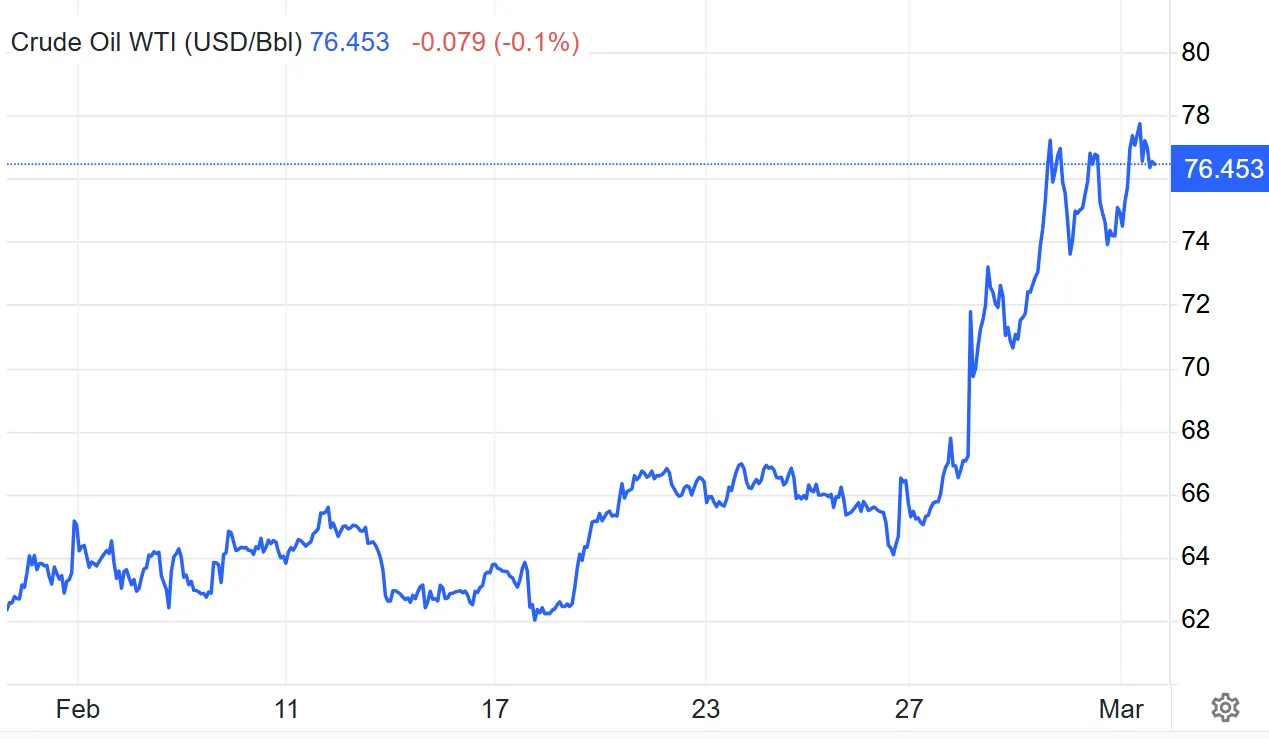
Analysts estimate that Iran itself accounts for roughly 5 percent of global oil output. If only Iranian exports are disrupted, oil prices could rise by about 20 percent as major buyers like China scramble to replace supply. Scenario analysis by banks and think tanks suggests that limited disruption to Iranian barrels could add 10–12 dollars per barrel to crude prices.
The bigger risk is if the conflict leads to attacks on tankers or a partial closure of the Strait of Hormuz, choking up to 18 million barrels per day of non‑Iranian energy flows. In this case, crude could spike above 90 dollars per barrel and, under a prolonged and broad regional war, even trade in the 90–110 dollar range or higher.
Oil prices have already reacted sharply, climbing to multi‑month highs as traders price in the possibility of supply disruptions and prolonged instability in the region. This is the channel through which a war thousands of kilometres away hits the Indian economy and your portfolio.
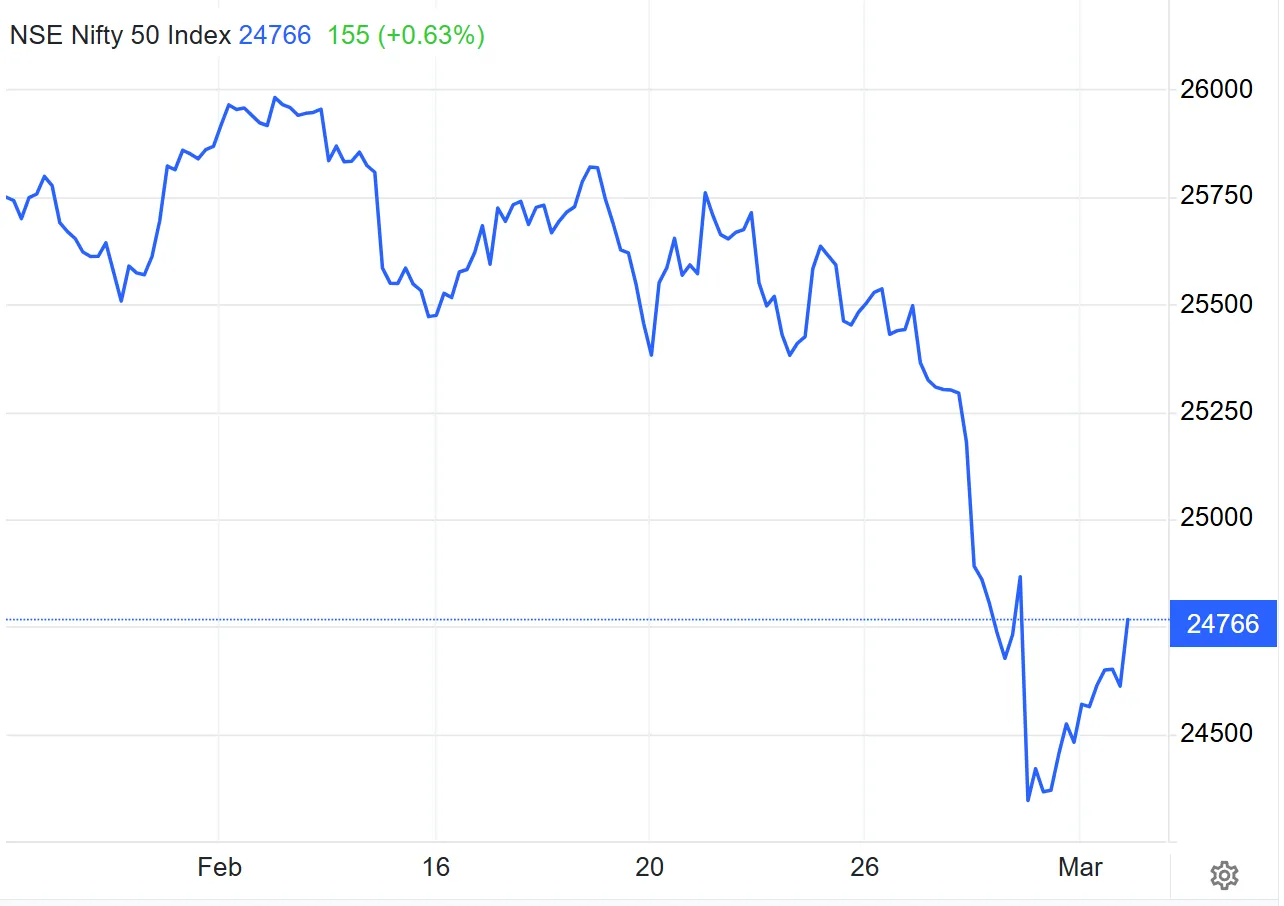
India imports around 85–88 percent of its crude oil needs, and a significant portion of this comes from Gulf producers whose shipments pass through the Strait of Hormuz. As the Iran–Israel conflict escalated and oil spiked, Indian equities underperformed global peers and saw a sharp risk‑off move.
Market data since the strikes show:
The Nifty and Sensex saw immediate one‑day drops as the war headlines and crude spike hit sentiment.
India’s rupee weakened towards record lows on fears of a higher oil import bill and widening current account deficit.
Bond yields inched up as investors priced in the risk that higher oil could push inflation above the Reserve Bank of India’s comfort zone and delay any rate cuts.
Source : Trading Economics
Global strategists are already flagging India as “most at risk” in Asia from the Iran war because of its heavy reliance on imported energy. According to Goldman Sachs estimates, a 20 percent jump in Brent crude could shave about 2 percent off regional earnings, with India particularly vulnerable. Societe Generale and Natixis have both suggested that India’s underperformance may deepen if oil stays elevated.
Historical experience also supports this caution. During the Russia–Ukraine war, Nifty corrected by roughly 10 percent in the first half of 2022 as oil surged and risk sentiment weakened. Analysts estimate that a 10 percent rise in oil prices adds about 30 basis points to inflation and knocks 15 basis points off GDP growth for India. A prolonged Iran conflict could create a similar macro drag.
Not all sectors react the same way to a war‑driven oil shock. For Indian investors, it helps to think in terms of energy‑sensitive, rate‑sensitive, and defensive/beneficiary pockets.
Likely losers if crude stays high:
Oil marketing companies (OMCs): Higher crude raises their input costs and can squeeze margins if retail prices are politically capped.
Aviation and travel: Jet fuel is a major cost, and higher fares can hurt demand, especially if combined with weaker consumer sentiment.
Logistics, chemicals, and other energy‑intensive industries: Rising fuel and feedstock costs hit profitability unless they can pass it on to consumers.
Rate‑sensitive sectors (NBFCs, real estate, autos): If oil‑driven inflation forces the RBI to keep rates higher for longer, borrowing costs and EM valuation multiples come under pressure.
Potential relative beneficiaries or defensives:
Upstream energy and commodity producers: Firms with oil, gas, or commodity exposure may see better realizations if prices stay elevated.
Defence and security‑linked companies: Heightened geopolitical risk boosts defence spending narratives and can support order books and valuations.
IT and export‑oriented sectors: While global growth risk rises, a weaker rupee can partially offset, supporting rupee revenues for exporters.
For diversified Indian investors, the message is not to make extreme, one‑way sector bets purely on war news, but to understand which parts of the market are structurally more exposed to expensive oil and a weaker rupee.
When oil spikes due to war, the impact on India flows through a clear macro chain: oil → import bill → current account → rupee → inflation → RBI policy → growth and valuations.
Higher import bill and current account pressureIndia’s oil import bill jumps as prices rise, widening the trade deficit. If this persists, the current account deficit can move higher, making India more dependent on capital flows to fund the gap.
Rupee weaknessAs oil outflows rise and global risk sentiment deteriorates, the rupee tends to weaken. A weaker rupee itself is inflationary because imported goods, including fuel, become more expensive in rupee terms.
Inflation and RBI’s dilemmaAnalysts estimate that a 10 percent rise in oil prices pushes CPI inflation higher by around 30 basis points. If Brent jumps from, say, 80 to 100 dollars and stays there, this can significantly complicate the RBI’s disinflation path. The central bank may have to delay rate cuts or even adopt a more hawkish tone, which affects valuations for rate‑sensitive stocks and overall market multiples.
Growth impactHigher fuel costs squeeze corporate margins and household purchasing power, leaving less money for discretionary spending and investment. Growth estimates can be revised down, which feeds back into equity earnings expectations and price targets.
This is why foreign strategists repeatedly highlight India’s vulnerability to Middle East shocks: it is not just an oil story, but a full macro transmission that can weigh on both the economy and asset prices.
From the Russia–Ukraine war to repeated flare‑ups in the Middle East, geopolitical risk has become a semi‑permanent feature of the investing landscape. For a country like India, deeply integrated into global energy and trade flows, these events will keep affecting markets from time to time.
However, the long‑term drivers of Indian equities demographics, urbanization, digitization, manufacturing push, and financialization of savings do not vanish because of one conflict. What changes is the near‑term path: higher volatility, temporary growth scares, and shifts in sector leadership.
For Indian investors, the sensible response is neither complacency nor panic, but a disciplined framework: understand what is happening, map the macro and sector channels, and stick to a systematic, diversified investing process that can absorb shocks and benefit when stability returns.
The Iran–Israel conflict is a serious and evolving risk, but with the right strategy, it becomes one more event to navigate, not a reason to abandon your long‑term wealth‑creation journey.
Discover investment portfolios that are designed for maximum returns at low risk.
Learn how we choose the right asset mix for your risk profile across all market conditions.
Get weekly market insights and facts right in your inbox


It depicts the actual and verifiable returns generated by the portfolios of SEBI registered entities. Live performance does not include any backtested data or claim and does not guarantee future returns.
By proceeding, you understand that investments are subjected to market risks and agree that returns shown on the platform were not used as an advertisement or promotion to influence your investment decisions.
"I was drawn to Wright Research due to its multi-factor approach. Their Balanced MFT is an excellent product."

By Prashant Sharma
CTO, Zydus
By signing up, you agree to our Terms and Privacy Policy
"I was drawn to Wright Research due to its multi-factor approach. Their Balanced MFT is an excellent product."
By Prashant Sharma
CTO, Zydus
Skip Password
By signing up, you agree to our Terms and Privacy Policy
"I was drawn to Wright Research due to its multi-factor approach. Their Balanced MFT is an excellent product."
By Prashant Sharma
CTO, Zydus
"I was drawn to Wright Research due to its multi-factor approach. Their Balanced MFT is an excellent product."
By Prashant Sharma
CTO, Zydus
Log in with Password →
By logging in, you agree to our Terms and Privacy Policy
"I was drawn to Wright Research due to its multi-factor approach. Their Balanced MFT is an excellent product."
By Prashant Sharma
CTO, Zydus
Log in with OTP →
By logging in, you agree to our Terms and Privacy Policy
"I was drawn to Wright Research due to its multi-factor approach. Their Balanced MFT is an excellent product."
By Prashant Sharma
CTO, Zydus
Answer these questions to get a personalized portfolio or skip to see trending portfolios.
Answer these questions to get a personalized portfolio or skip to see trending portfolios.
(You can choose multiple options)
Answer these questions to get a personalized portfolio or skip to see trending portfolios.
Answer these questions to get a personalized portfolio or skip to see trending portfolios.
Answer these questions to get a personalized portfolio or skip to see trending portfolios.
(You can choose multiple options)
Investor Profile Score
We've tailored Portfolio Management services for your profile.
View Recommended Portfolios Restart