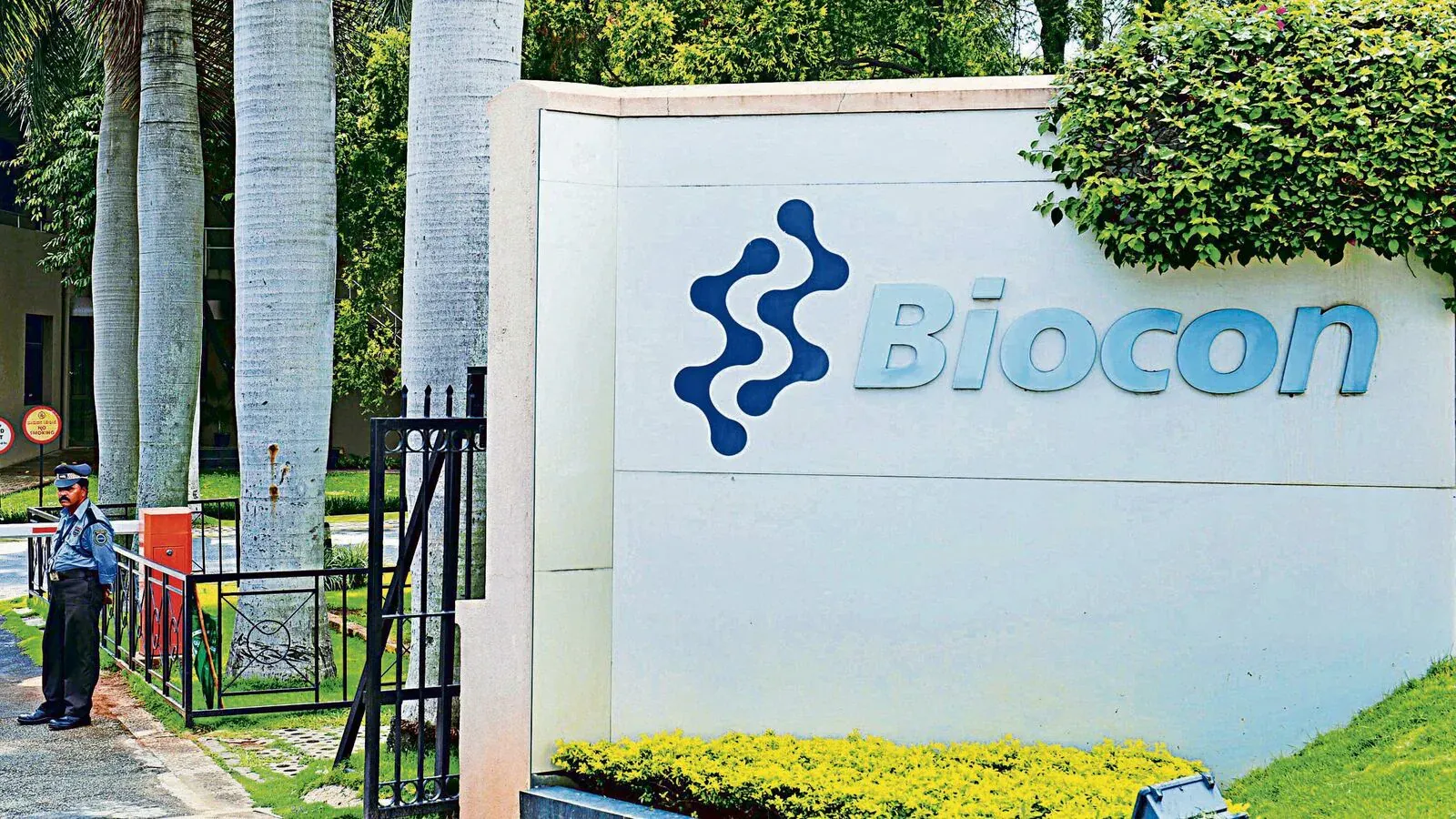
In December 2025, Indian pharmaceutical giant Biocon announced one of the biggest decisions in its history. The company decided to fully integrate its subsidiary, Biocon Biologics, into itself. This $5.5 billion deal is reshaping the future of affordable medicines for millions of patients worldwide.

Think of it like this: Biocon started Biocon Biologics as a separate company to focus on biosimilars (affordable versions of expensive biological medicines). Over time, other investors like Serum Institute, Tata Capital, and Viatris bought stakes in this unit. Now, Biocon is bringing everything back under one roof by buying out all these other investors.
The numbers are huge. Biocon Biologics is valued at $5.5 billion. To complete this deal, Biocon will:
Acquire stakes from Serum Institute Life Sciences, Tata Capital Growth Fund, and other investors through a share swap arrangement (trading 70.28 Biocon shares for every 100 Biocon Biologics shares)
Buy out Viatris (formerly Mylan) for $815 million in a combination of cash and shares
Raise Rs 4,500 crore (approximately $540 million) through investor placements to fund part of this
The entire integration process should be complete by March 31, 2026.
You might wonder: why merge now instead of earlier? Biocon's leadership carefully studied all options. They considered taking Biocon Biologics public through an IPO, keeping it separate, or merging it back. After thorough analysis, they concluded that full integration would be the smartest move for everyone involved.
The main reason is creating a unique global player. Currently, Biocon makes generic medicines (affordable versions of regular drugs), while Biocon Biologics specializes in biosimilars (affordable versions of complex biological medicines). By merging them, Biocon becomes one of the only companies worldwide offering both generics and biosimilars at a global scale.
This is particularly powerful in treating diabetes. Biocon is the only company globally that offers both biosimilar insulins and generic versions of GLP-1 peptides (the popular diabetes and weight loss medicines). This combination allows them to help millions of patients with what doctors call the "diabesity" epidemic (the combination of diabetes and obesity).
The biosimilars market is exploding. The global biosimilars market was worth $35 billion in 2025 and is expected to reach $72 billion by 2035. That's roughly double in just ten years. India is leading this growth with a 19.4% annual growth rate, and Biocon Biologics is right at the center of this revolution.
The key growth areas are in three major disease categories: diabetes, oncology (cancer), and immunology (autoimmune diseases). Together, these three areas account for nearly 40% of all pharmaceutical revenues worldwide. By merging, Biocon gains a stronger position in all three areas.
Biocon Biologics currently has 10 biosimilar products that are already serving patients in over 120 countries. They serve more than 6.3 million patients globally. The parent company, Biocon, has over 90 generic products. Combined, this creates a powerhouse for patient care.
The integration will streamline everything. Instead of two separate organizations with different systems, reporting, and management structures, Biocon will now run as one unified company. This simplification has real benefits:
First, it reduces complexity. Managing two separate companies with different boards, different financial systems, and different strategic goals is complicated and expensive. One integrated company can make decisions faster and more efficiently.
Second, it creates operational synergies. Biocon can now combine its generics manufacturing expertise with Biocon Biologics' biosimilars manufacturing capabilities. Supply chains can be optimized. Sales teams can sell both types of products together, reaching more customers.
Third, it allows better global coordination. With a unified structure across 120+ countries, Biocon can negotiate better with healthcare systems, manage inventory more efficiently, and respond to market changes more quickly.
Leadership transitions are an important part of any merger. Shreehas Tambe, who currently leads Biocon Biologics, will become the CEO of the entire combined business after integration is complete. Tambe has been with the Biocon group for 28 years and knows both the biosimilars and parent company well.
Kiran Mazumdar-Shaw, the founder and executive chairwoman of Biocon, will chair a new Governance Council overseeing the integration. Siddharth Mittal, the current CEO of Biocon, will move into another senior leadership role in the group.
This leadership structure ensures smooth transition and maintains the expertise of people who understand both businesses.
Let's look at what Biocon Biologics has achieved recently. In the financial year ending March 2025, the company reported:
Revenue of Rs 9,017 crore (approximately $1.08 billion), growing 15% year-over-year
Net profit of Rs 1,013 crore, showing strong profitability
R&D investment of Rs 592 crore (7% of revenue) to build new medicines
Even more impressive, four of their biosimilar products each crossed $200 million in annual sales. This shows real commercial success in the highly competitive global biosimilars market.
Biocon Limited itself is a major public company with a market capitalization of over Rs 51,000 crore (approximately $6.1 billion). The combined company will be much larger and stronger in the competitive pharmaceutical world.
For patients around the world, this deal is genuinely good news. Here's why:
First, Biocon's mission is to make life-saving medicines affordable. When medicines are affordable, more patients can access them. Biosimilars typically cost 20-50% less than the original biological medicines they're based on. This merger allows Biocon to scale up production and distribution of these affordable alternatives.
Second, combining diabetes medicines with cancer medicines and autoimmune disease medicines under one company means better research into how these diseases interact. Many patients have diabetes and also suffer from cancer or autoimmune diseases. A unified company can develop better treatment approaches for these complex patients.
Third, the investment in research and development continues strongly. The combined company will invest even more in developing new biosimilars for diseases that currently lack affordable treatment options. This is particularly important for diseases prevalent in developing countries where cost is a barrier to treatment.
No major corporate merger is without challenges. Integration of two companies always faces obstacles:
First, there's the integration timeline itself. Completing the merger by March 31, 2026, is an ambitious goal. Any delays could affect the company's growth plans.
Second, employee integration is always complex. Combining two organizations means some roles may become redundant, and corporate cultures may need to blend. Biocon has experience here, having successfully integrated the Viatris biosimilars business in 2022, one year ahead of schedule.
Third, regulatory approvals across 120+ countries are required. While Biocon expects to get these approvals, delays in any major market could slow the process.
The Bigger Picture
This merger represents Biocon's evolution from a company focused primarily on generics to a company that's a global leader in biosimilars while maintaining strength in generics.
Looking back, Biocon acquired Viatris' entire biosimilars business for $3.3 billion in 2022. That deal made Biocon Biologics the fully integrated global biosimilars company it is today. Now, five years later, Biocon is choosing to bring it completely in-house at a valuation of $5.5 billion, reflecting the significant growth and success of the biosimilars business.
This shows confidence in the biosimilars market and in Biocon's ability to lead it. The company is betting that the future of affordable medicines lies in combining strong positions across generics and biologics, diabetes and oncology, emerging markets and developed markets.
The Biocon Biologics buyout represents more than just a corporate transaction. It's about building a truly global pharmaceutical company positioned to address the world's biggest health challenges affordably. With diabetes, obesity, cancer, and autoimmune diseases affecting hundreds of millions of people worldwide, the need for affordable, high-quality medicines has never been greater.
Biocon is strategically positioned to meet this need. By merging Biocon Biologics back into the parent company, it's creating an organization that can innovate faster, scale bigger, and serve patients better. For the pharmaceutical industry, patients, and emerging markets particularly, this could be a significant positive development in the ongoing global effort to make essential medicines accessible to all who need them.
The real test will come in the execution. If Biocon successfully integrates these businesses by early 2026 while maintaining growth momentum, it could establish a new template for how emerging market pharmaceutical companies can compete globally. For millions of patients with diabetes, cancer, and autoimmune diseases, that's genuinely important news.
Written by Naman Agarwal
Discover investment portfolios that are designed for maximum returns at low risk.
Learn how we choose the right asset mix for your risk profile across all market conditions.
Get weekly market insights and facts right in your inbox


It depicts the actual and verifiable returns generated by the portfolios of SEBI registered entities. Live performance does not include any backtested data or claim and does not guarantee future returns.
By proceeding, you understand that investments are subjected to market risks and agree that returns shown on the platform were not used as an advertisement or promotion to influence your investment decisions.
"I was drawn to Wright Research due to its multi-factor approach. Their Balanced MFT is an excellent product."

By Prashant Sharma
CTO, Zydus
By signing up, you agree to our Terms and Privacy Policy
"I was drawn to Wright Research due to its multi-factor approach. Their Balanced MFT is an excellent product."
By Prashant Sharma
CTO, Zydus
Skip Password
By signing up, you agree to our Terms and Privacy Policy
"I was drawn to Wright Research due to its multi-factor approach. Their Balanced MFT is an excellent product."
By Prashant Sharma
CTO, Zydus
"I was drawn to Wright Research due to its multi-factor approach. Their Balanced MFT is an excellent product."
By Prashant Sharma
CTO, Zydus
Log in with Password →
By logging in, you agree to our Terms and Privacy Policy
"I was drawn to Wright Research due to its multi-factor approach. Their Balanced MFT is an excellent product."
By Prashant Sharma
CTO, Zydus
Log in with OTP →
By logging in, you agree to our Terms and Privacy Policy
"I was drawn to Wright Research due to its multi-factor approach. Their Balanced MFT is an excellent product."
By Prashant Sharma
CTO, Zydus
Answer these questions to get a personalized portfolio or skip to see trending portfolios.
Answer these questions to get a personalized portfolio or skip to see trending portfolios.
(You can choose multiple options)
Answer these questions to get a personalized portfolio or skip to see trending portfolios.
Answer these questions to get a personalized portfolio or skip to see trending portfolios.
Answer these questions to get a personalized portfolio or skip to see trending portfolios.
(You can choose multiple options)
Investor Profile Score
We've tailored Portfolio Management services for your profile.
View Recommended Portfolios Restart